Category: Bird Walks

Harriman Lake, April 7, with Chuck Aid and David Chernack

To begin with, the weather was far milder than anticipated, the sun broke through the scattered clouds, and we ended up tallying 42 species of birds.  So, it was certainly a fantastic morning for the ten of us that showed up to greet the day and the birds.
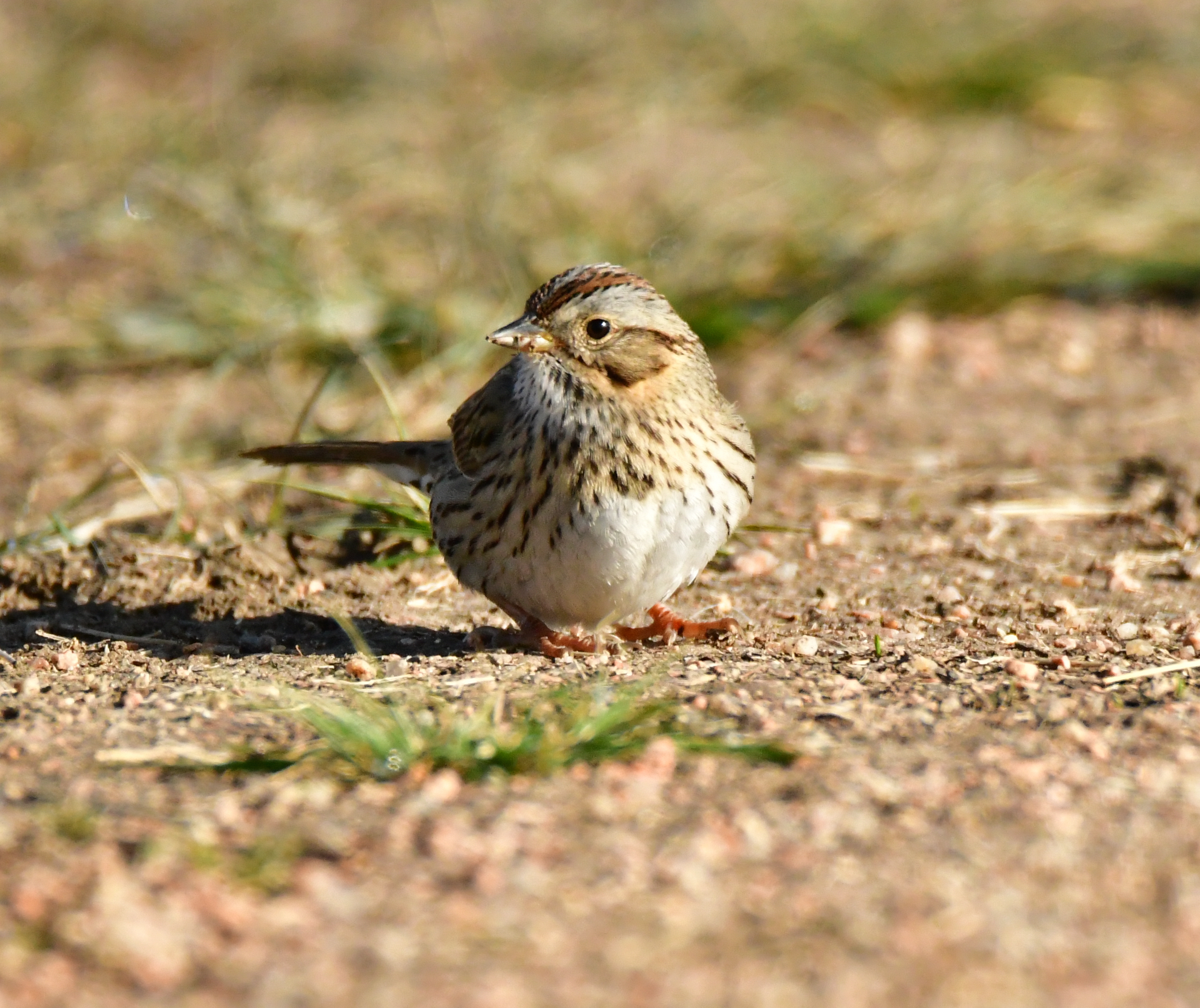
Lincoln’s Sparrows are a relatively irregular sparrow in the Front Range. Our group was lucky enough to watch a small flock of eight foraging along the path just feet away. (c) David Chernack

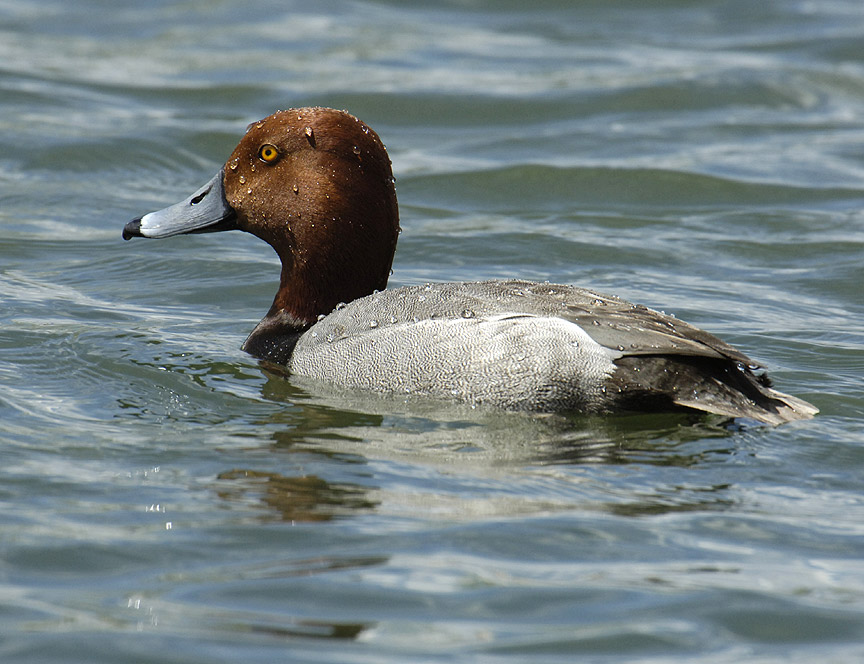
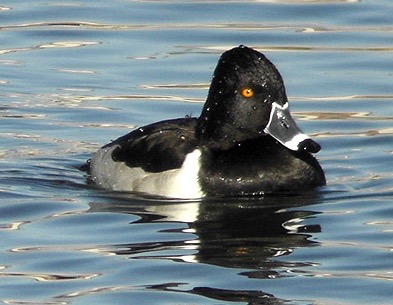
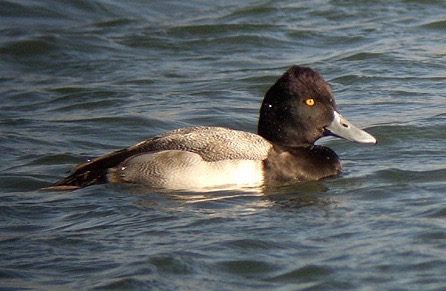
Harriman Lake continues to be a very nice local hot spot for wintering and migratory waterfowl.  Some of these were not apparent on Saturday.  We saw no Western Grebes, no geese other than Canada, or any of the three teal species, and there were no American Wigeons, Canvasbacks, Redheads, or any of the three merganser species.  However, what we did see was pretty great!  To begin with we had three members of the Aythya genus: Ring-necked Duck, Lesser Scaup, and the more uncommon Greater Scaup.  In one of the early field books for Colorado birders Harold Holt and James Lane (first published, I believe, in 1987), instead of using terms such as “abundant” and “rare,” used expressions like “Hard to miss” or “May see.”  For Greater Scaup they said, “Lucky to find,” and we certainly counted ourselves as “lucky.”
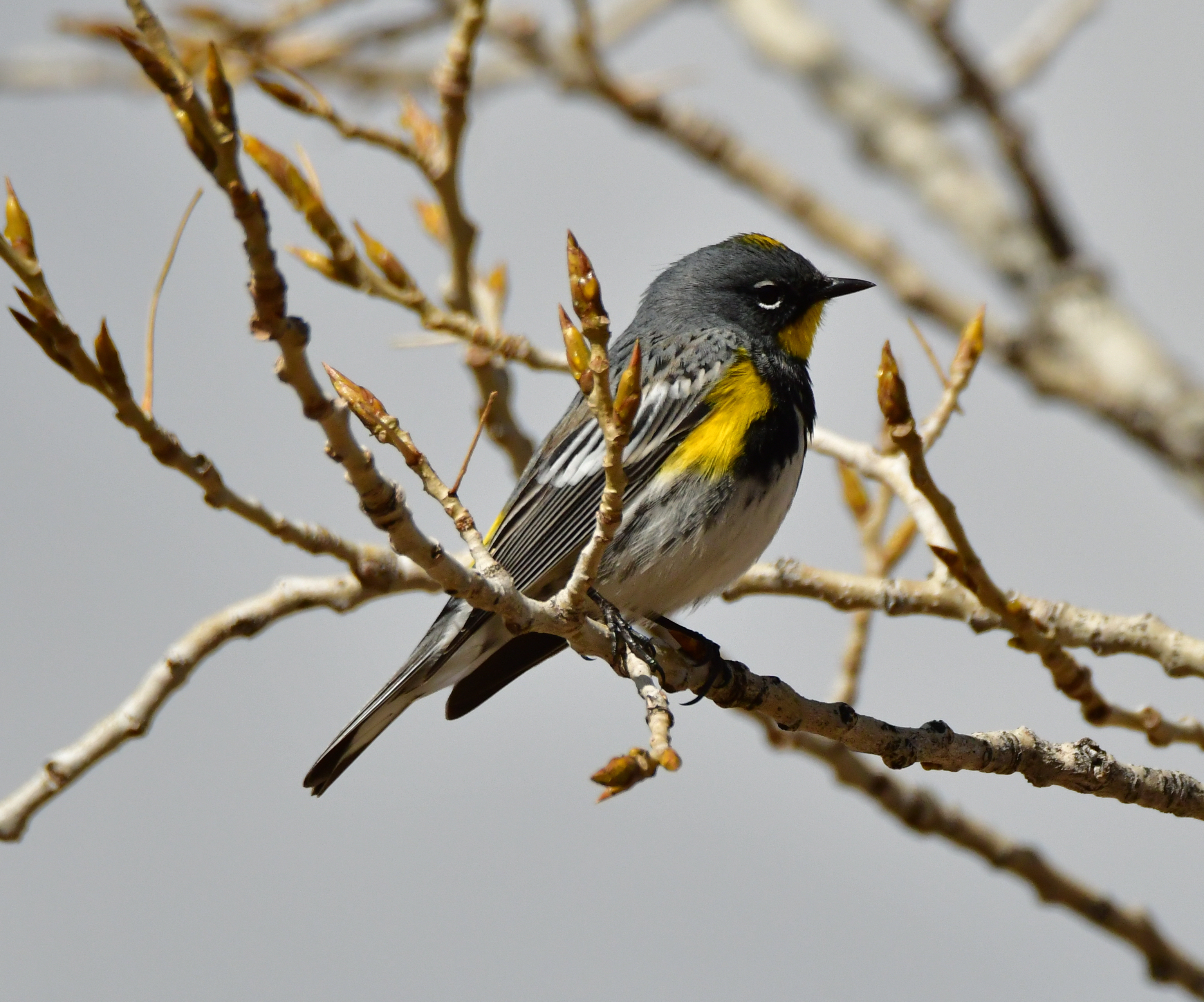
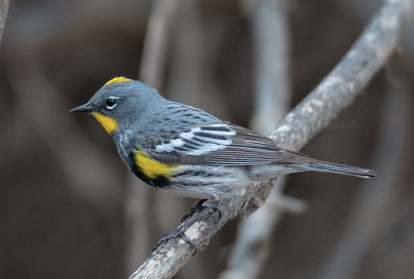
Is there anything that says spring more than a warbler? This Yellow-rumped Warbler (Audubon’s subspecies) gave us great looks as it foraged in a lakeside cottonwood. (c) David Chernack

We had high numbers for Buffleheads (90) and Ruddy Ducks (45), earning us on eBird what I’ve come to call “the dreaded black box.”  If you use the eBird app to enter your bird lists you may know whereof I speak.  The black box appears whenever you record a species that’s unanticipated for your location, or if you enter a number in excess of what eBird thinks is reasonable for your location.  eBird then asks that you justify your sighting in some way, e.g. a good written description or a photograph of what you saw.  Justifying these dramatic changes in numbers can be particularly tricky during migration when good sized flocks can be present one day and gone the next.

A couple of other great sightings included fifteen Pied-billed Grebes and an Eared Grebe.  The Pied-bills seem to have a real affinity for Harriman, possibly based on the apparently abundant crayfish population, and they can be seen here year-round.  We often see the Pied-bills with full beaks trying to decide whether to eat a crayfish head first or tail first.  In contrast, the window for seeing Eared Grebes in Colorado in the spring is rather narrow (roughly late March through late May), so this was another lucky find.
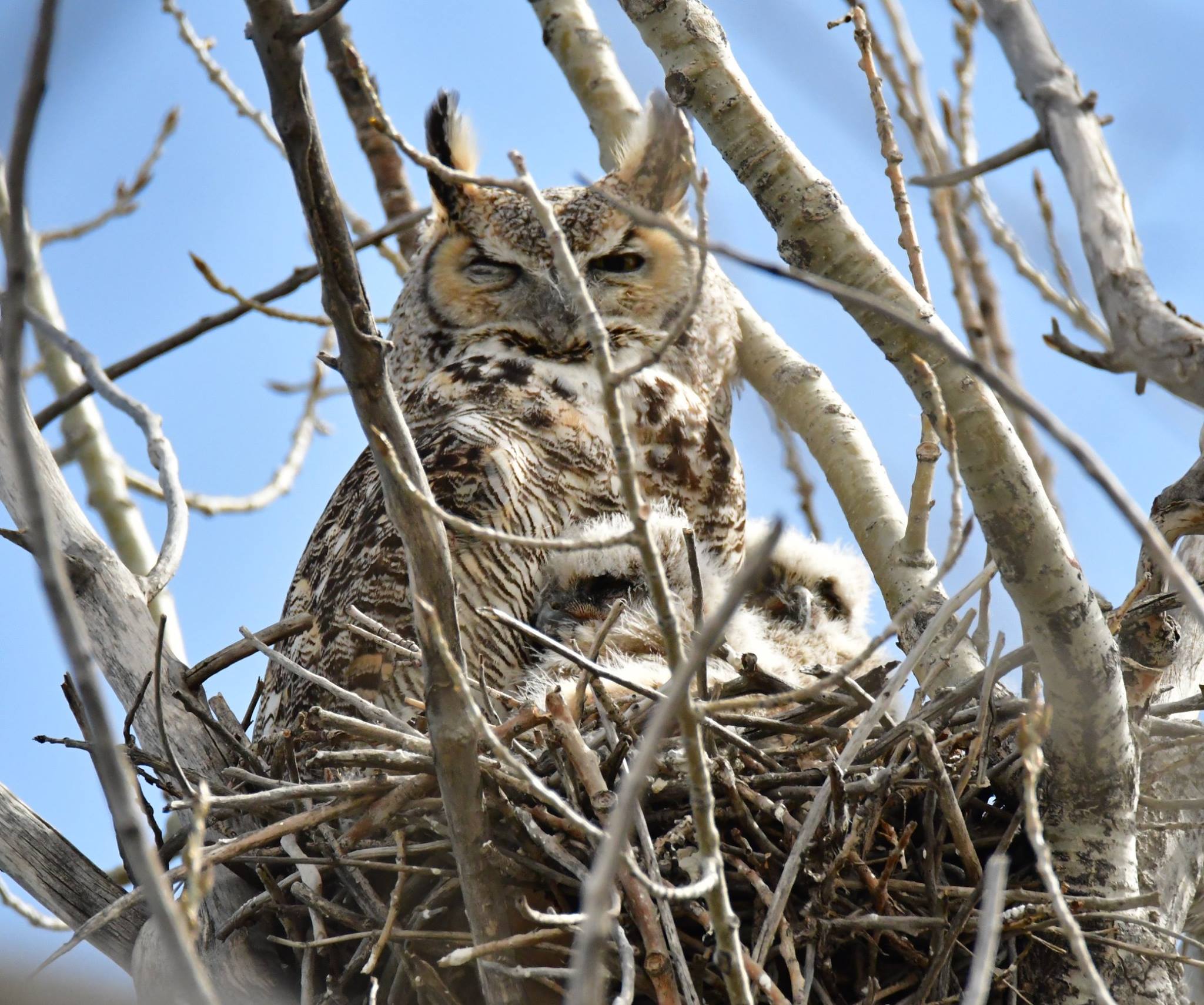
Okay, maybe baby birds say spring better than warblers! This tired mama Great-horned Owl seemed unworried with our group; her owlets were far more curious. (c) David Chernack

We did pretty well with the raptors, even though we came away without having seen a Red-tailed Hawk.  However, a Northern Harrier, two Coopers Hawks, and, what was a first of the season bird for all of us, a Swainson’s Hawk made up for the Red-tail deficiency.

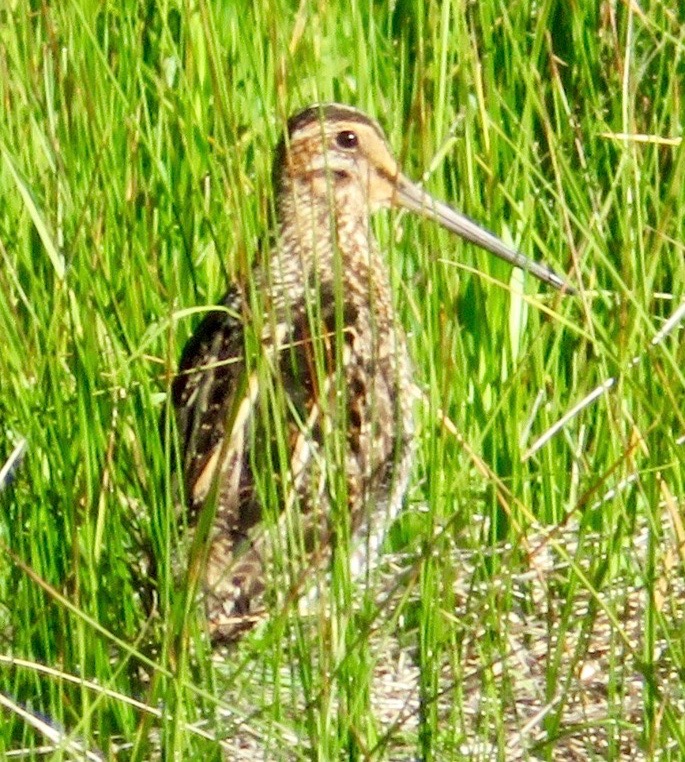
Additional highlights included a single Wilson’s Snipe, a beautiful male Audubon’s Warbler in full regalia, a small flock of migratory Lincoln’s Sparrows sticking to the lowlands for the time being, but heading up to breed in the montane willows eventually, and a large number of Tree Swallows coursing back and forth over the lake and grabbing insects from the water’s surface.  By the way, the Eared Grebe seemed to be taking advantage of this same food resource, whatever it was.

Finally, we wrapped up our morning with a Great Horned Owl mom sitting in her nest with two fuzzy nestlings.  All in all, another great morning bird-watching.
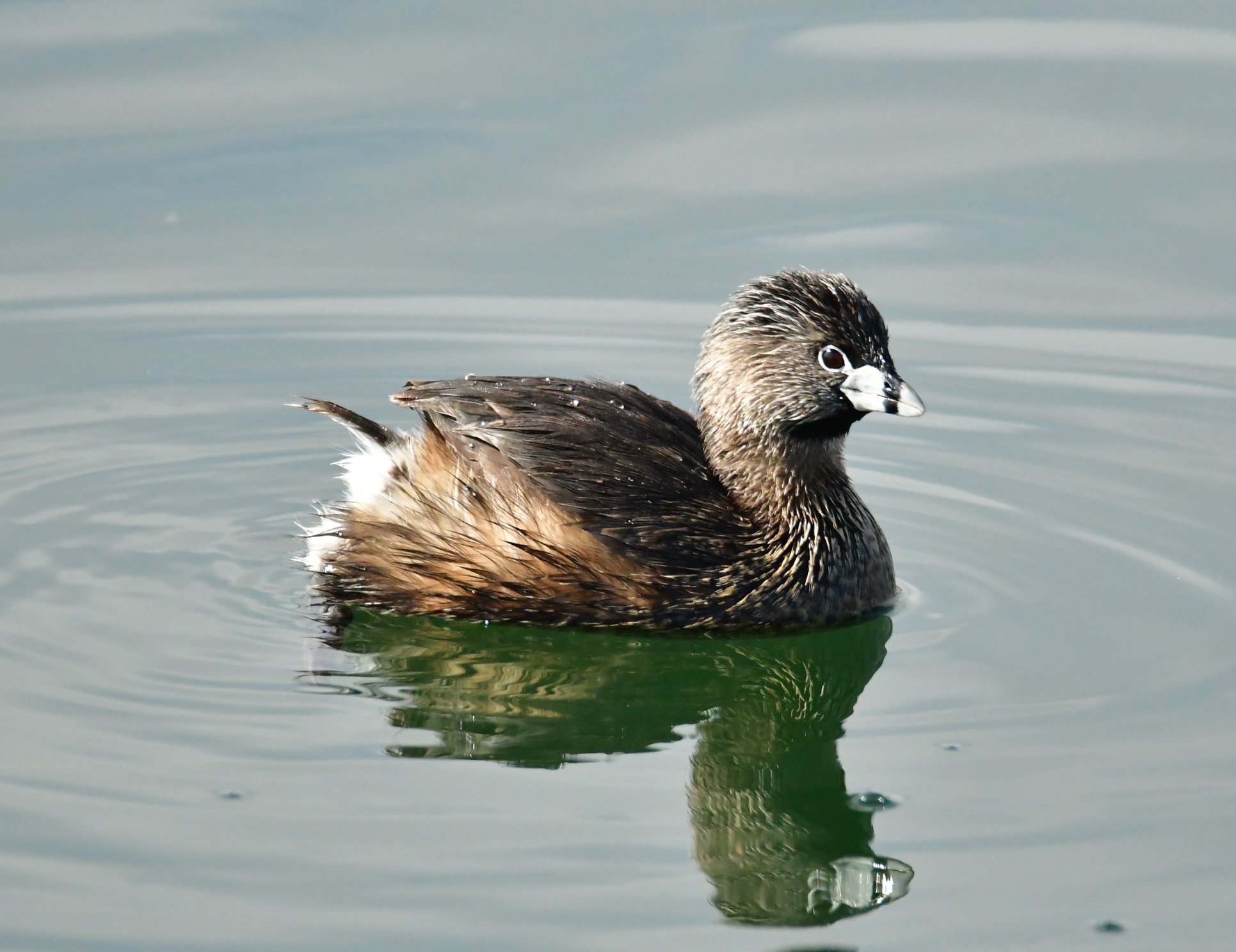
Pied-billed Grebes, while not the most bright and colorful of the waterfowl, are still a favorite of many birders. We counted more than a dozen as we circled Harriman Lake, most likely diving to catch crayfish on the bottom. (c) David Chernack

Hope to see you on another walk soon or at the FRBC open house on May 12 (we’re offering four different bird walks that morning)!

Chuck and David


Harriman Lake, Apr 7, 2018
42 species

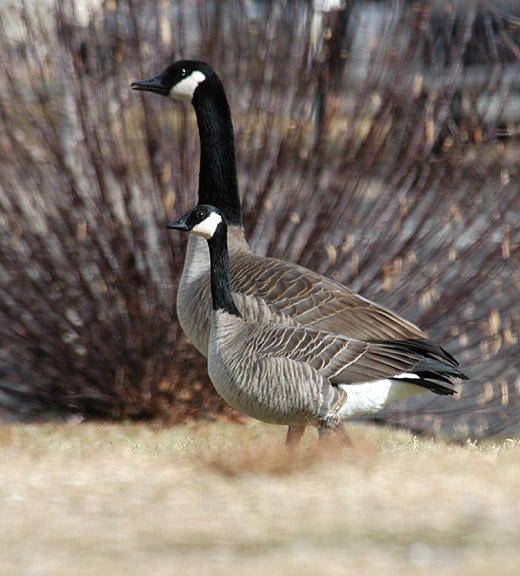
Canada Goose (Branta canadensis)  7
Northern Shoveler (Spatula clypeata)  28
Gadwall (Mareca strepera)  9
Mallard (Anas platyrhynchos)  17
Ring-necked Duck (Aythya collaris)  3
Greater Scaup (Aythya marila)  3
Lesser Scaup (Aythya affinis)  23
Bufflehead (Bucephala albeola)  90
Common Goldeneye (Bucephala clangula)  15
Ruddy Duck (Oxyura jamaicensis)  45
Pied-billed Grebe (Podilymbus podiceps)  15
Eared Grebe (Podiceps nigricollis)  1
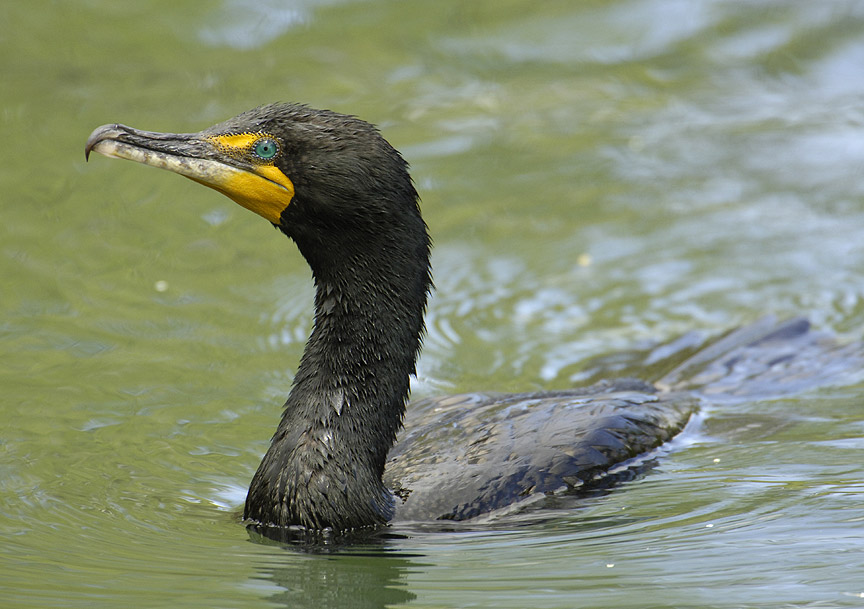
Double-crested Cormorant (Phalacrocorax auritus)  3
Great Blue Heron (Ardea herodias)  3
Northern Harrier (Circus hudsonius)  1
Cooper’s Hawk (Accipiter cooperii)  2
Swainson’s Hawk (Buteo swainsoni)  1
American Coot (Fulica americana)  155
Killdeer (Charadrius vociferus)  1
Wilson’s Snipe (Gallinago delicata)  1
Ring-billed Gull (Larus delawarensis)  2
Eurasian Collared-Dove (Streptopelia decaocto)  3
Mourning Dove (Zenaida macroura)  1
Great Horned Owl (Bubo virginianus)  3
Northern Flicker (Colaptes auratus)  5
Blue Jay (Cyanocitta cristata)  3
Black-billed Magpie (Pica hudsonia)  6
American Crow (Corvus brachyrhynchos)  8
Common Raven (Corvus corax)  2
Tree Swallow (Tachycineta bicolor)  45
Black-capped Chickadee (Poecile atricapillus)  3
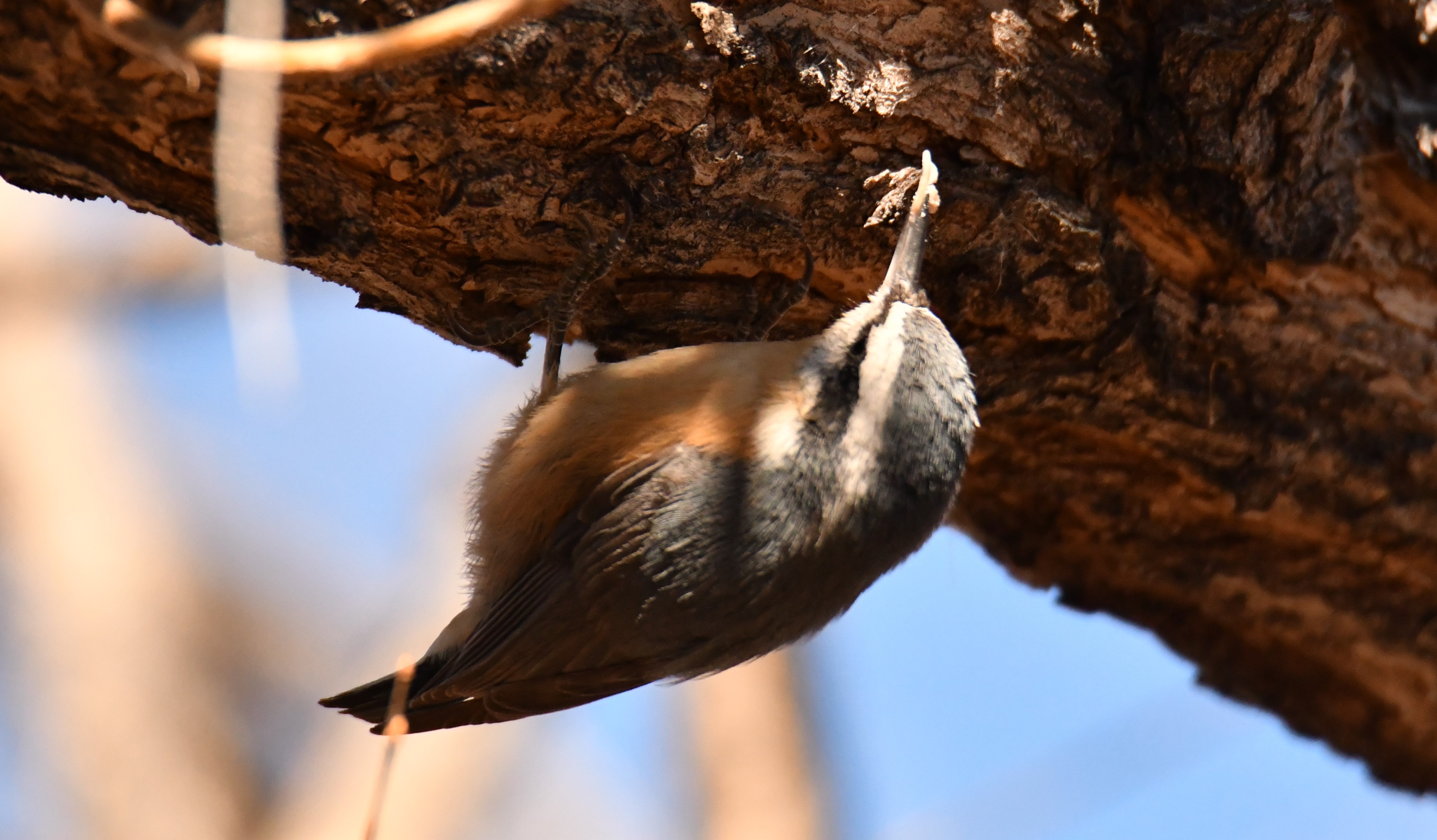
White-breasted Nuthatch (Sitta carolinensis)  2
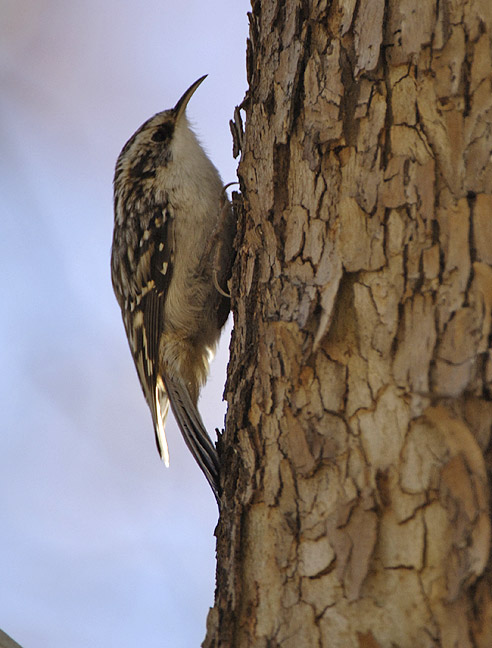
Brown Creeper (Certhia americana)  1
American Robin (Turdus migratorius)  12
European Starling (Sturnus vulgaris)  9
Yellow-rumped Warbler (Audubon’s) (Setophaga coronata auduboni)  1
Song Sparrow (Melospiza melodia)  6
Lincoln’s Sparrow (Melospiza lincolnii)  8
Western Meadowlark (Sturnella neglecta)  4
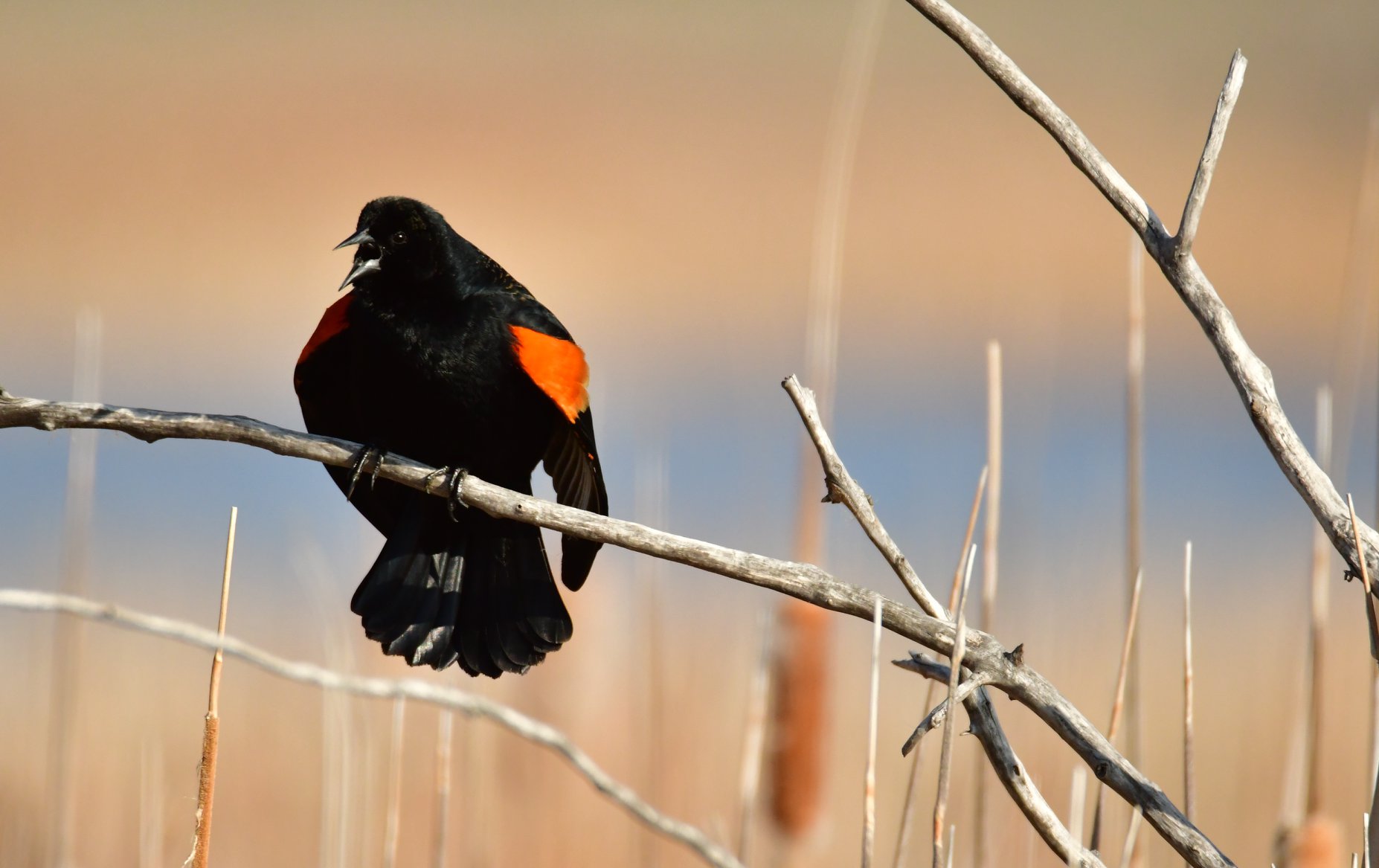
Red-winged Blackbird (Agelaius phoeniceus)  182
Common Grackle (Quiscalus quiscula)  11
House Finch (Haemorhous mexicanus)  3
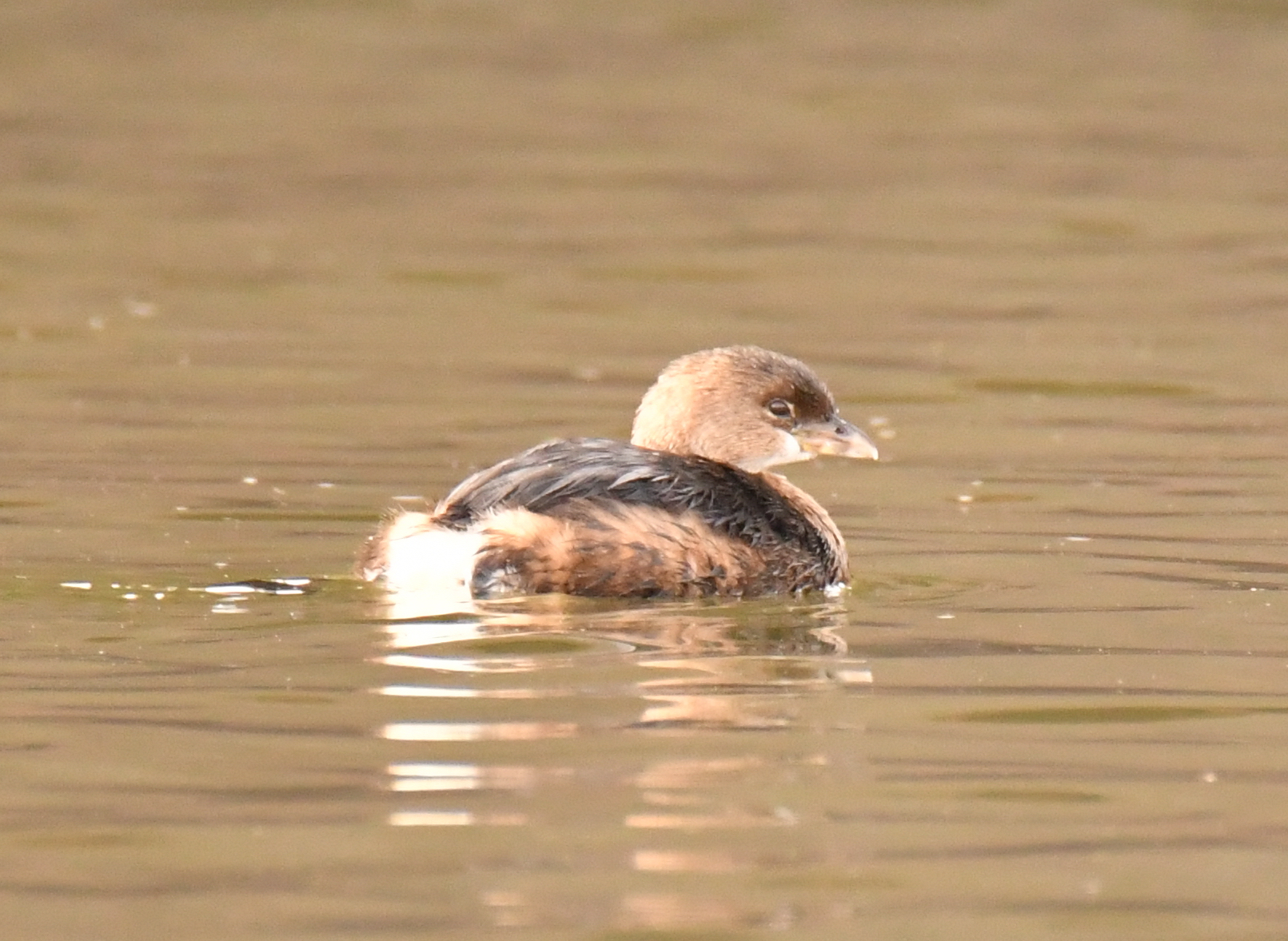
Hudson Gardens Bird Walk, January 27th, with David Chernack and Jennifer O’Keefe

Beautiful blue skies made for excellent birding this past Saturday morning along the South Platte River at Hudson Gardens. A wide range of birds were seen, from a tiny Ruby-crowned Kinglet to an enormous juvenile Bald Eagle and everything in between!

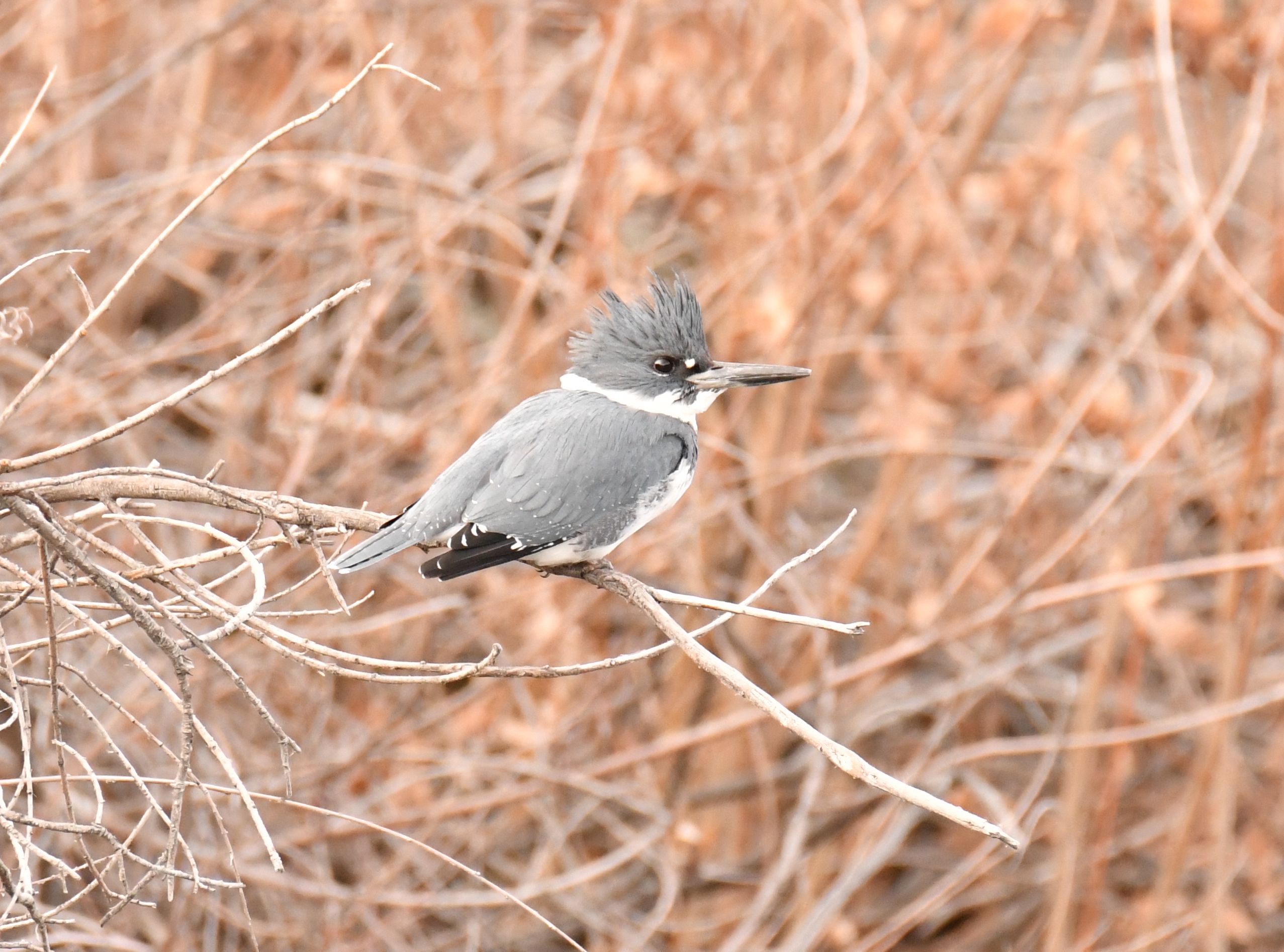
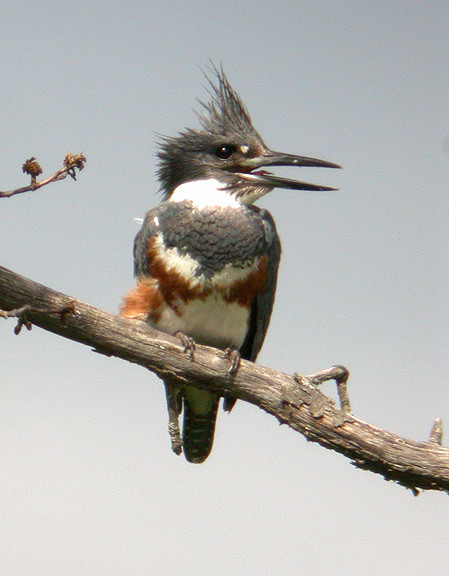
We often heard the duo of Belted Kingfishers approaching our group before we saw them — their metallic, rattling calls are unmistakable. (c) David Chernack

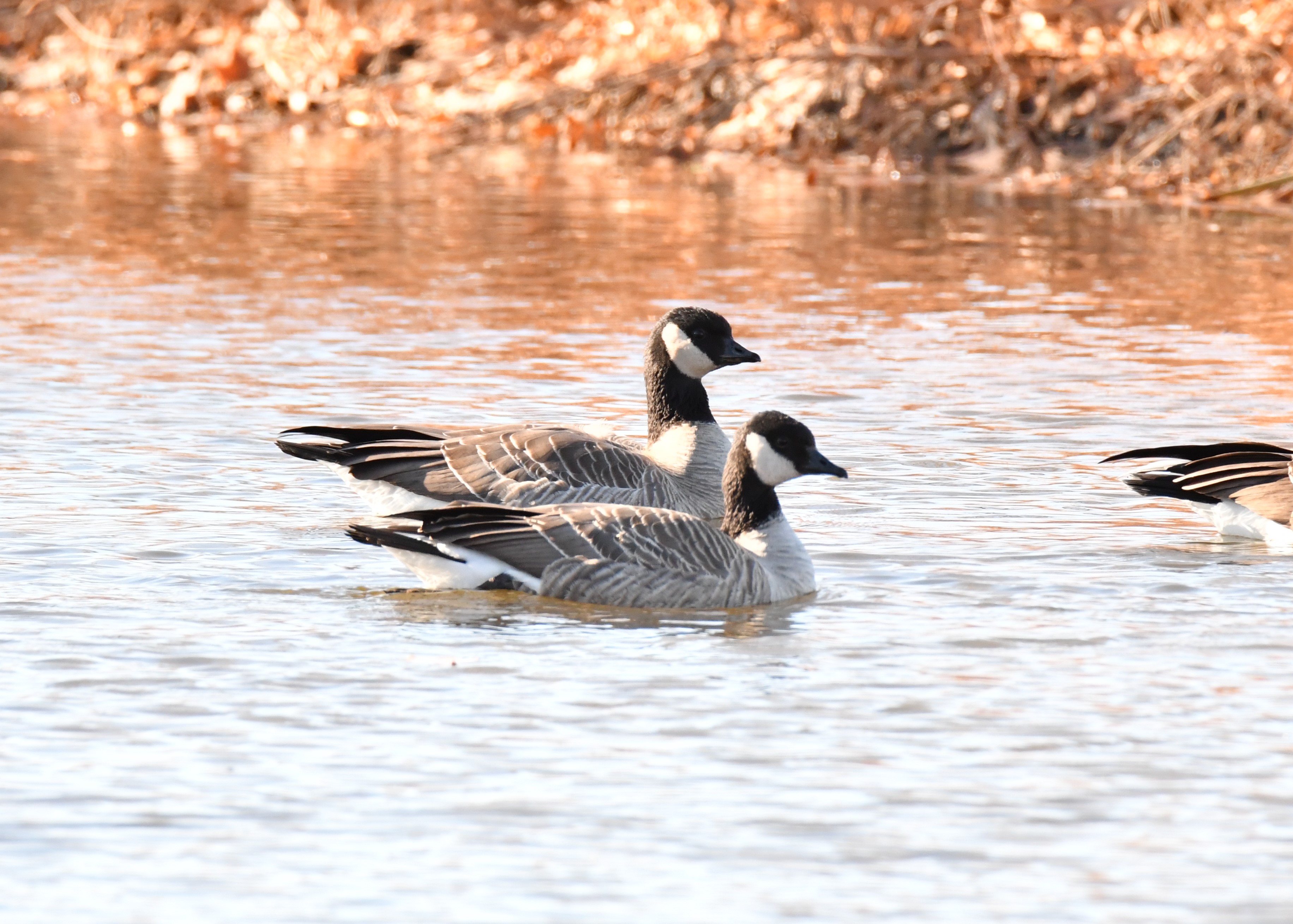
Our walk largely consisted of hugging the South Platte, keenly eyeing the only non-frozen water in the vicinity for large numbers of waterbirds. Present in huge numbers were Cackling geese, which actually vastly outnumbered their more well-known relatives, the Canada geese. Amongst the large number of Cackling and Canada geese was one “gray goose” from the genus Anser, which includes the Ross’s geese and Snow geese. Those species are uncommon but regular winter visitors to the greater Denver area, and associate with Cackling and Canada geese while here; in their breeding grounds, they also hybridize with them, creating a broad and confusing spectrum of hybrids which can be difficult to identify. Our mystery goose gave our group the impression of a Canada X Ross’s goose hybrid, but it flew off with several Cackling geese before we could make the final call. Shame!

Also present along the river were Denver’s usual cast of winter characters, including Ring-necked Ducks, Mallards, Green-winged Teals, Gadwalls, and Hooded Mergansers. Not seen on our previous excursion to Hudson Gardens, two female Common Mergansers were present along our route, with one individual which was preening gave us excellent scope views. A mated pair of Common Goldeneyes were also found amongst the other ducks, and showed off their bright breeding plumage. A handful of Buffleheads energetically foraged as we advanced along the river, diving below the surface and quickly resurfacing. 

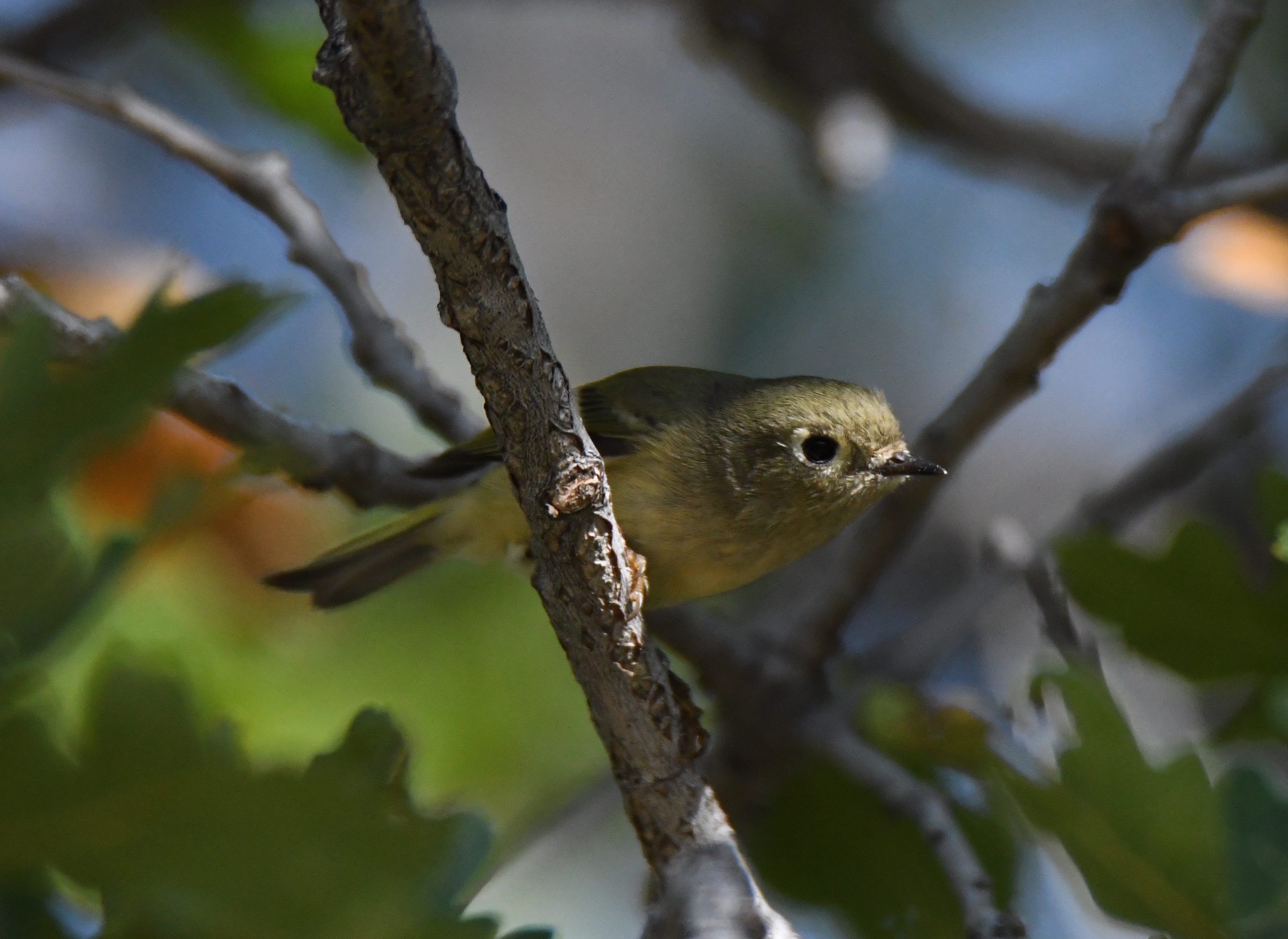
Seeing a Ruby-crowned Kinglet on a crisp winter morning was a little boost of summertime for our group! This individual was photographed in Ken-Caryl in September. (c) David Chernack


Our group found a surprising diversity of landbirds along our route as well. A unique surprise was seeing a Ruby-crowned Kinglet, a tiny bird filled with energy. Interestingly, the bird was foraging alongside some sparrows and Brown Creepers. A distinctly not tiny bird which we spotted perched atop a telephone pole was an impressive immature Bald Eagle; the bird was just beginning to show off its distinctive white head plumage. Also seen were two cantankerous Belted Kingfishers, a pair of Northern Flickers, and a single Red-breasted Nuthatch.

Check out the full list of species below or on eBird here!

David Chernack

Denver Botanic Gardens at Chatfield, Dec 2, with Chuck Aid and David Chernack

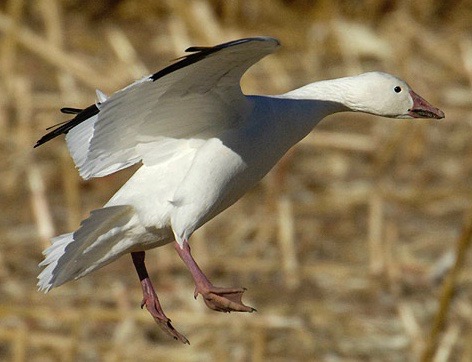
Snow Goose (c) Bill Schmoker

The weather was surprisingly mild for early December, and though we started out with our coats on it was not long before several of us were down to shirtsleeves.  November can be a good time to start seeing a wide variety of wintering geese and ducks, and while we had good luck getting three species of geese, Snow, Cackling, and Canada, we only came away with three species of ducks which is below what one might expect this time of year.  The high number of Mallards, almost 300, was most impressive.

Canada and Cackling Geese (c) Bill Schmoker

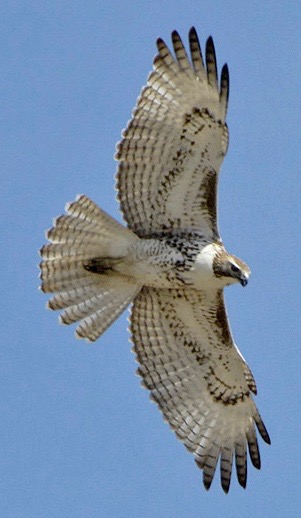
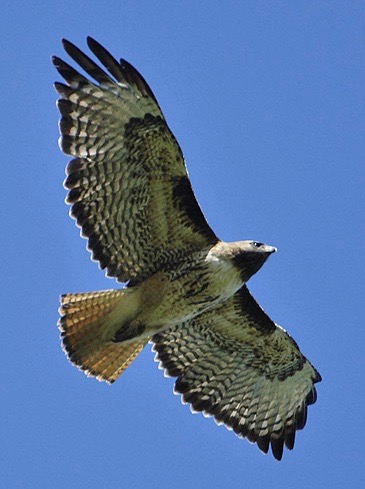
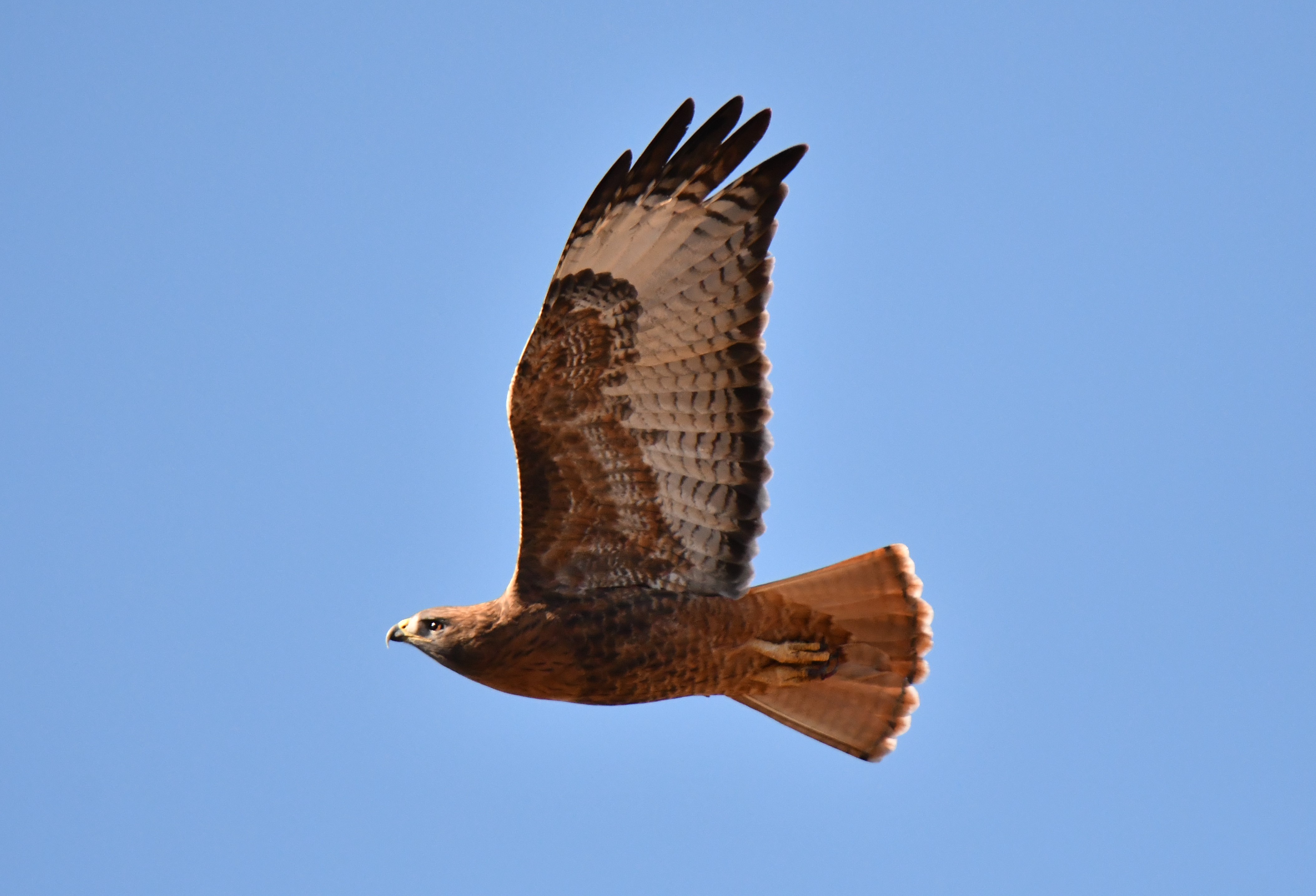
We managed to do well with the raptors.  We saw four Red-tails, and even though they were all our usual light plumaged western morph, there was good variety in their appearance.  There was a juvenile with a banded tail, and an adult with a “red” tail; some had more white on the scapulars, and others had less; some had a more obvious belly-band, others less so; and so it went.  One thing to start looking for in your Red-tails is whether they have a dark chin and throat (our western birds), or whether they have a white chin and throat (Eastern birds).  Living where we do at the foot of the Rockies – where East meets West – we are in a region where we find eastern and western forms of many species. 

Red-tailed Hawk – eastern juvenile (c) Bill Schmoker

Red-tailed Hawk -western adult (c) Bill Schmoker

As for our other raptors we had a distant, silhouetted view of a Prairie Falcon perched high on a pole – a bit more slender than a Buteo (the genus of soaring hawks), with a longer tail, and overall rather pale looking.  We had a great look at a Northern Harrier cruising low over the fields and wetlands – a slender bird with a long, banded tail, and long wings raised in a dihedral; and the white rump is always obvious.  And then we had another falcon, an American Kestrel, with beautiful rufous barring on her back.

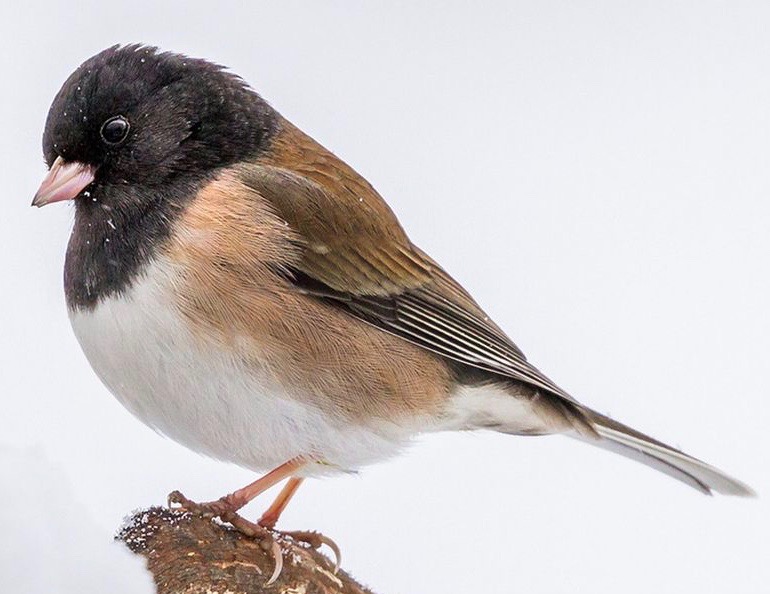
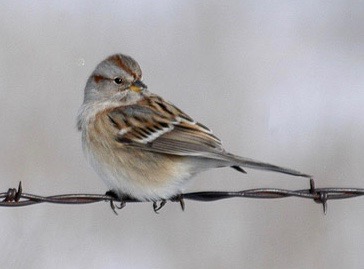
A few other highlights were provided by a good number of American Tree Sparrows, and then we had three races of Dark-eyed Juncos: Slate-colored, Oregon, and Pink-sided.  There are six races that occur around here in the winter, and it can be fun (and challenging) to sort them out.  At one time, they were considered to all be distinct species, but for now they have been lumped together as Dark-eyed Juncos.

We hope to see you on another walk soon!

Chuck and David


Denver Botanic Gardens at Chatfield, Dec 2, 2017
28 species

Snow Goose (Anser caerulescens)  1
Cackling Goose (Branta hutchinsii)  12
Canada Goose (Branta canadensis)  1500
Gadwall (Mareca strepera)  2
American Wigeon (Mareca americana)  3
Mallard (Anas platyrhynchos)  290
Great Blue Heron (Ardea herodias)  3
Northern Harrier (Circus hudsonius)  1
Red-tailed Hawk (Buteo jamaicensis)  4
Rock Pigeon (Feral Pigeon) (Columba livia (Feral Pigeon))  72
Eurasian Collared-Dove (Streptopelia decaocto)  10
Downy Woodpecker (Picoides pubescens)  4
Northern Flicker (Colaptes auratus)  4
American Kestrel (Falco sparverius)  1
Prairie Falcon (Falco mexicanus)  1
Black-billed Magpie (Pica hudsonia)  13
American Crow (Corvus brachyrhynchos)  112
Black-capped Chickadee (Poecile atricapillus)  6
White-breasted Nuthatch (Sitta carolinensis)  3
Brown Creeper (Certhia americana)  1
Townsend’s Solitaire (Myadestes townsendi)  1
American Robin (Turdus migratorius)  4
American Tree Sparrow (Spizelloides arborea)  14
Dark-eyed Junco (Junco hyemalis)  4
Dark-eyed Junco (Slate-colored) (Junco hyemalis hyemalis/carolinensis)  5
Dark-eyed Junco (Oregon) (Junco hyemalis [oreganus Group])  7
Dark-eyed Junco (Pink-sided) (Junco hyemalis mearnsi)  1
Song Sparrow (Melospiza melodia)  1
Red-winged Blackbird (Agelaius phoeniceus)  193
House Finch (Haemorhous mexicanus)  71
American Goldfinch (Spinus tristis)  5

Hudson Gardens Bird Walk, November 18 with Tom Bush and David Chernack

It was a chilly one out on Saturday morning, but the birds were out and a pleasant time was had birding at Hudson Gardens! We observed a respectable total of 24 species (see the full list below or on eBird here), including some great wintering waterfowl and a wonderful winter surprise: a Northern Shrike. 

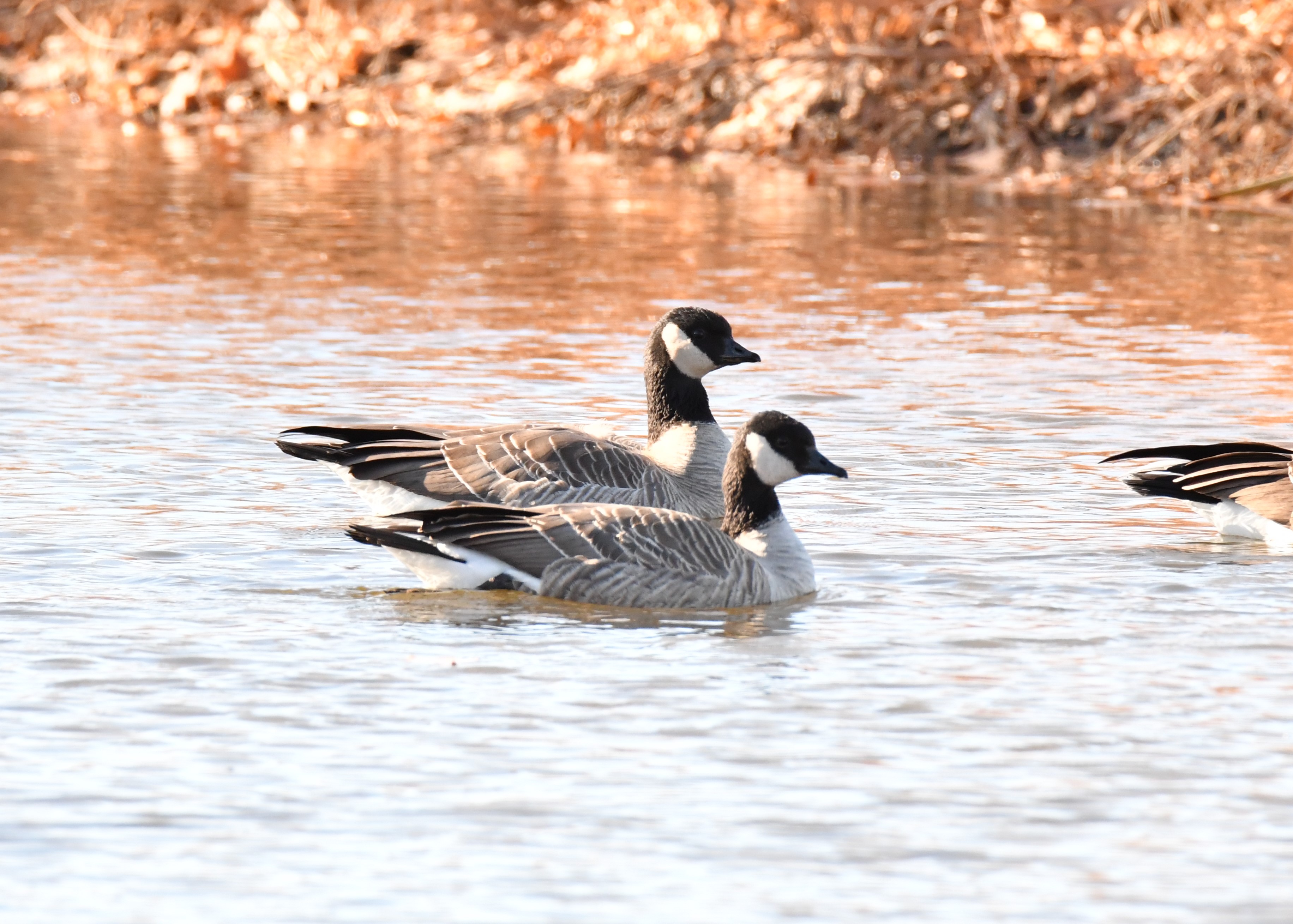
Cackling geese inundated the lawns of the Gardens this morning. Note their stubbier neck relative to their more well-known cousin, the Canada goose.

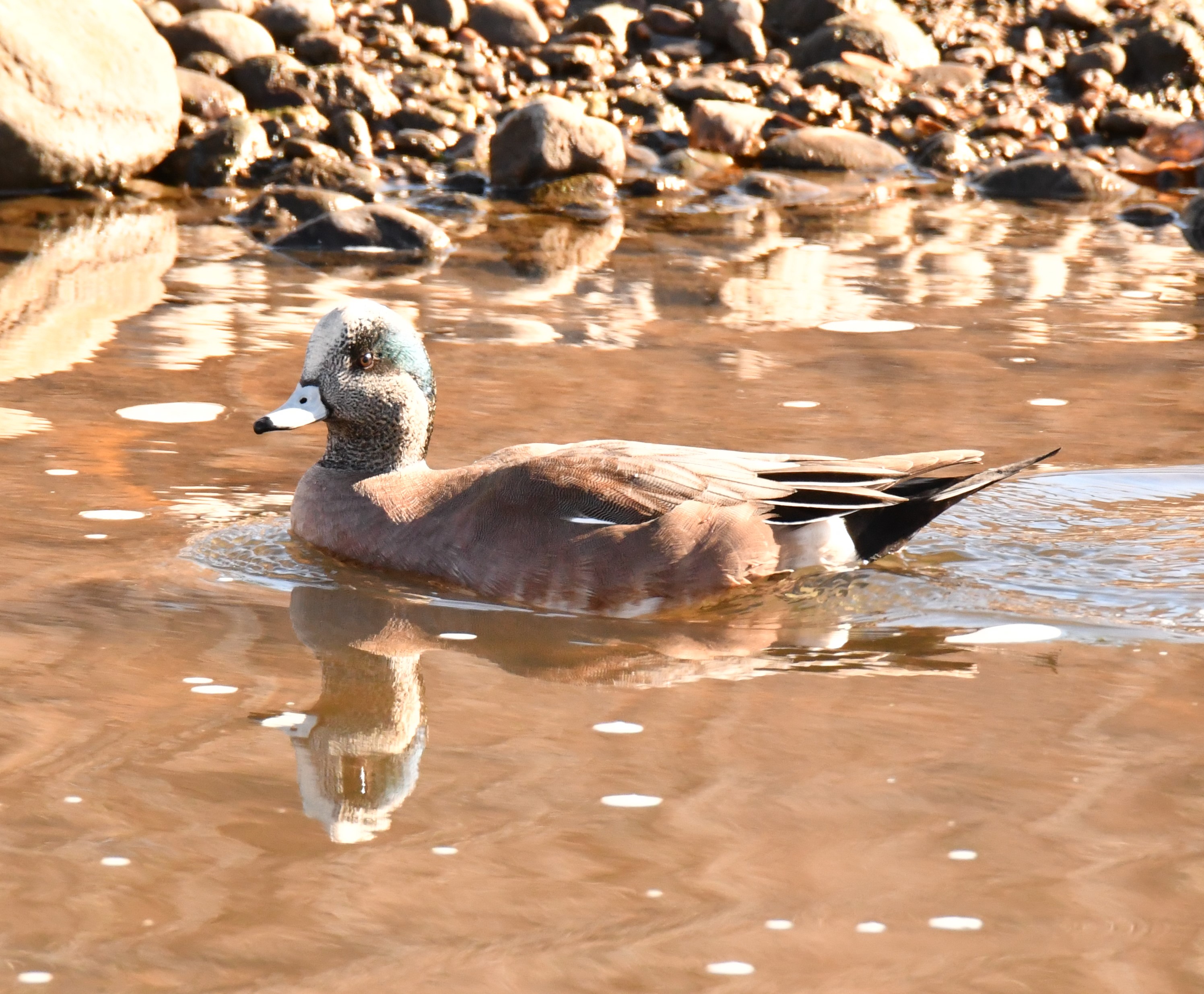
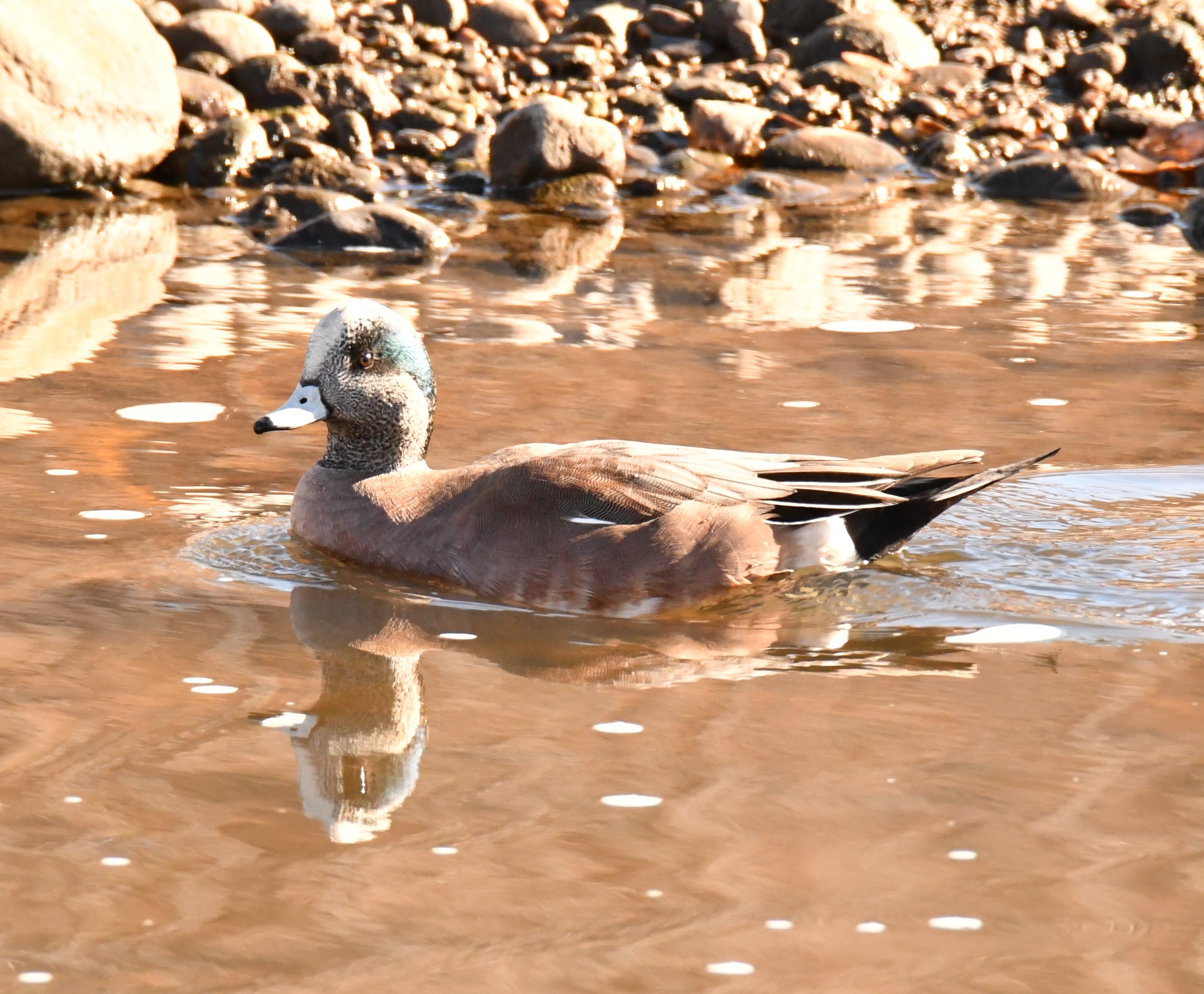
American wigeons are unique ducks: they are parasitic — often choosing to steal prey from other waterfowl rather than finding their own — and their calls sound like a windup toy.

Eight of the species observed — largely on the South Platte River or on small ponds nearby — were a mixture of geese, ducks, and other waterfowl. The most numerous birds observed were Canada Geese and their close cousins, Cackling Geese; both are members of the genus Branta. Though visibly very similar, the two species can be told apart by their calls (the cackling goose makes a slightly higher “honk” than the Canada goose) and by the length of their necks, with the cackling goose having a more compact neck than its Canadian relative.

Also in abundance were Mallards, with precisely 69 seen over the course of the trip; Mallards are included in the genus Anas, which encompasses some 31 species of dabbling ducks worldwide. Another member of the genus observed on the South Platte this morning were a duo of male Green-winged Teals. Several Gadwalls and American Wigeons — common winter dabbling ducks — were also observed foraging alongside the Mallards and teals. 

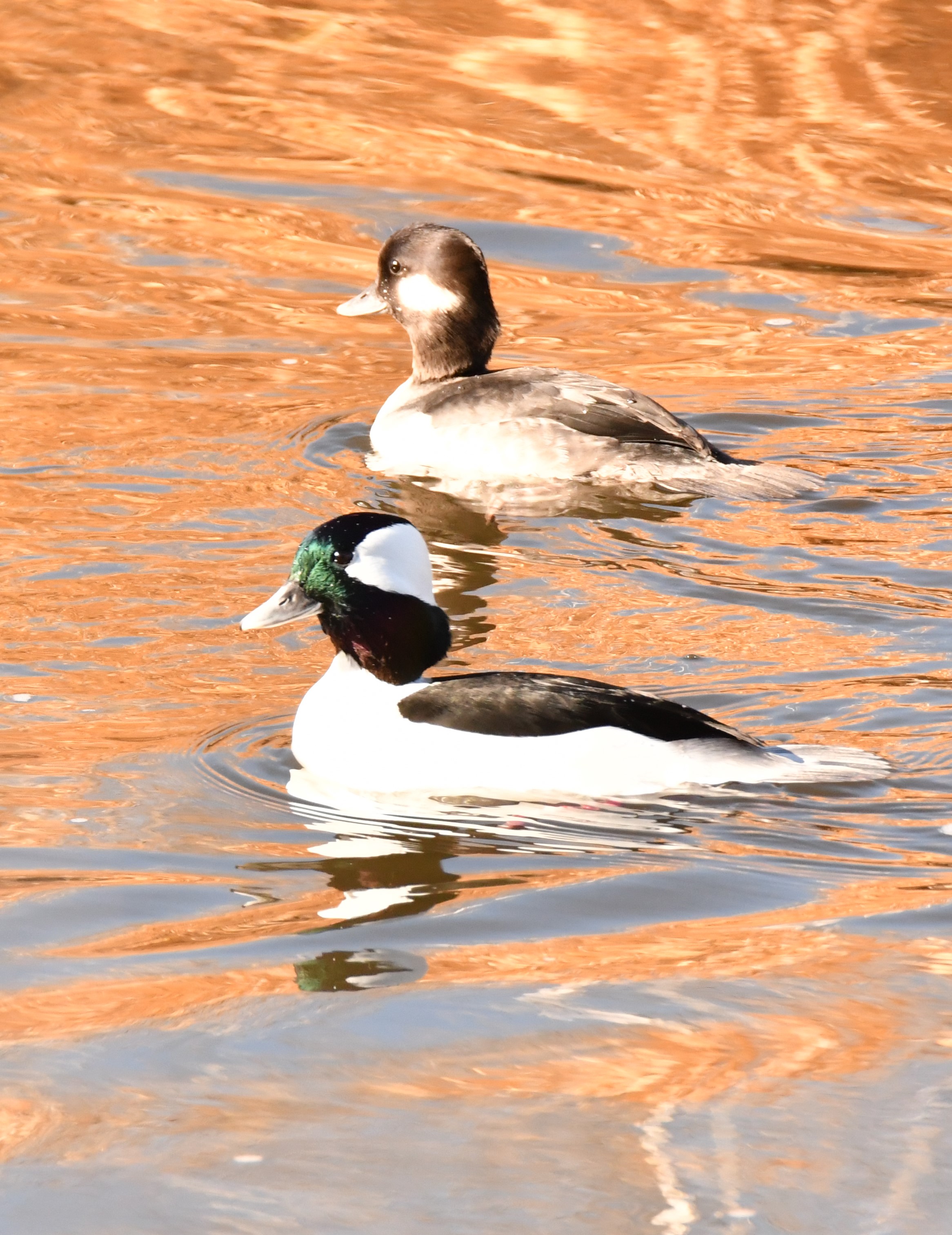
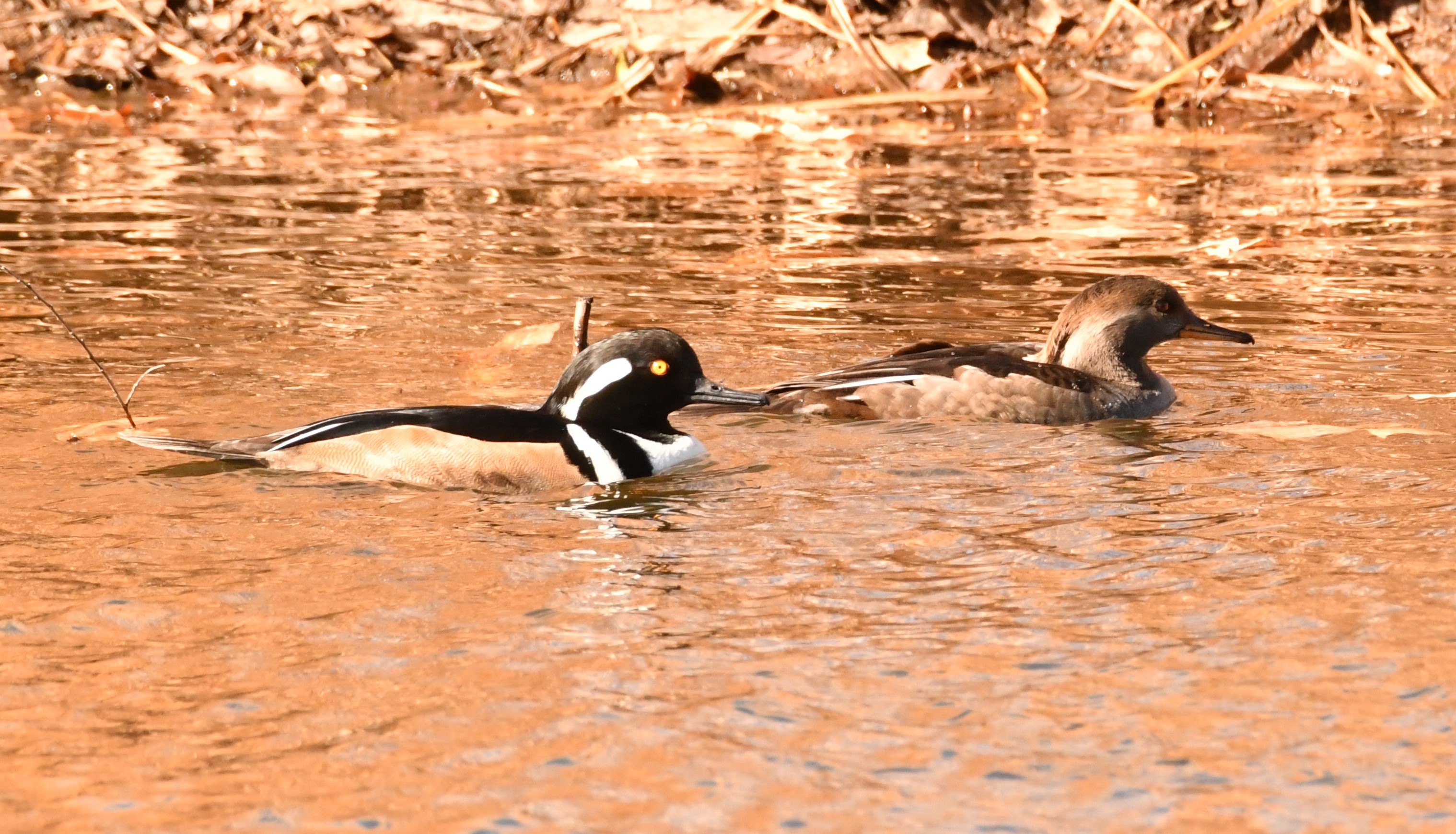
One of our diving ducks, the Bufflehead, was also out on the river, with both darker immature individuals and females and bright white mature males on display. No sign of the Buffleheads’ relatives in the genus Bucephala, the Common and Barrow’s Goldeneyes, on this trip however. Also putting some bright white breeding plumage on display were Hooded Mergansers, who were diving to forage alongside a large group of Gadwalls. Though these wonderful waterfowl species were a delight to see, notably missing were any species from genus Aythya: the Greater and Lesser Scaups, Ring-necked Duck, Redhead, and Canvasback. 

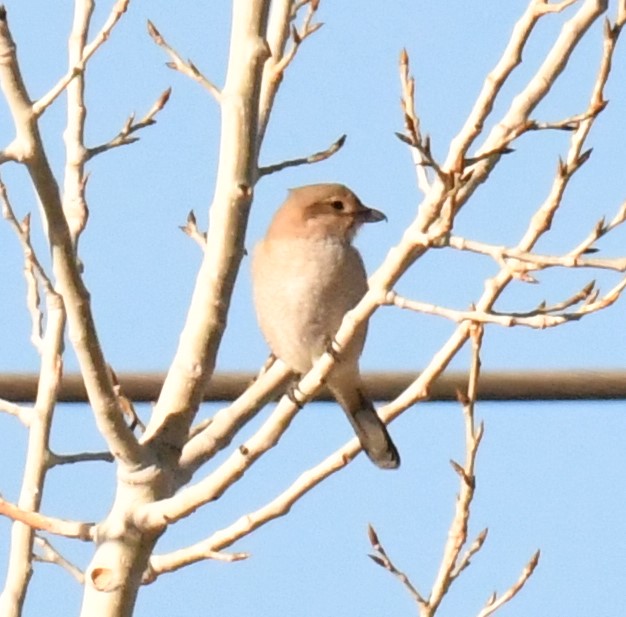
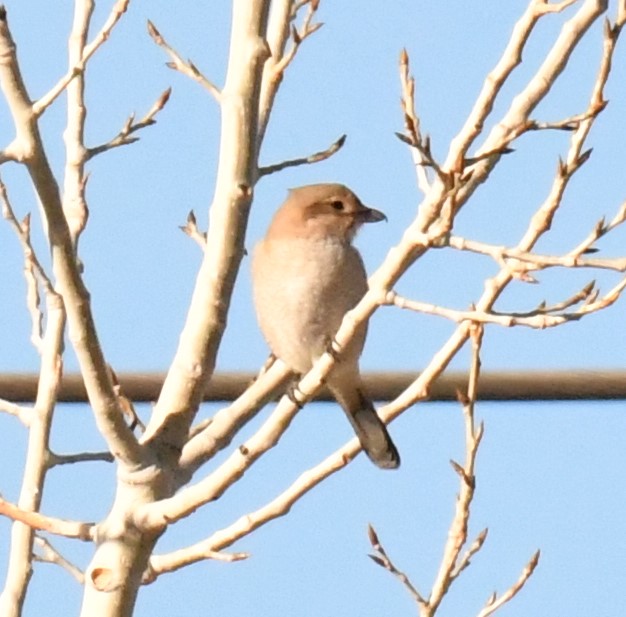
One great surprise we had this morning was a bird with a high fearsomeness-to-size ratio: a Northern Shrike! Shrikes are technically songbirds; however, they hunt for prey such as lizards and small rodents just like raptors. Since they are not technically raptors and don’t have large talons at their disposal, shrikes will attack and carry prey with their specially adapted hooked bills; in order to kill and consume their prey, they will impale their unfortunate catch on spikes, such as the thorns on a honeylocust tree on the barbs of a barbed wire. As their name suggests, these shrikes breed spruce forests in Alaska and the northern Canadian provinces; they spend their winters from British Columbia to Massachusetts. Getting to see one on our walk was a real treat. 


Our surprise shrike was too far away to get much of a snapshot, but you can still see this individual (likely a first-year bird) has a distinct hooked beak. This one was showing a diagnostic shrike behavior: perching high in a tree to survey the ground below for prey.

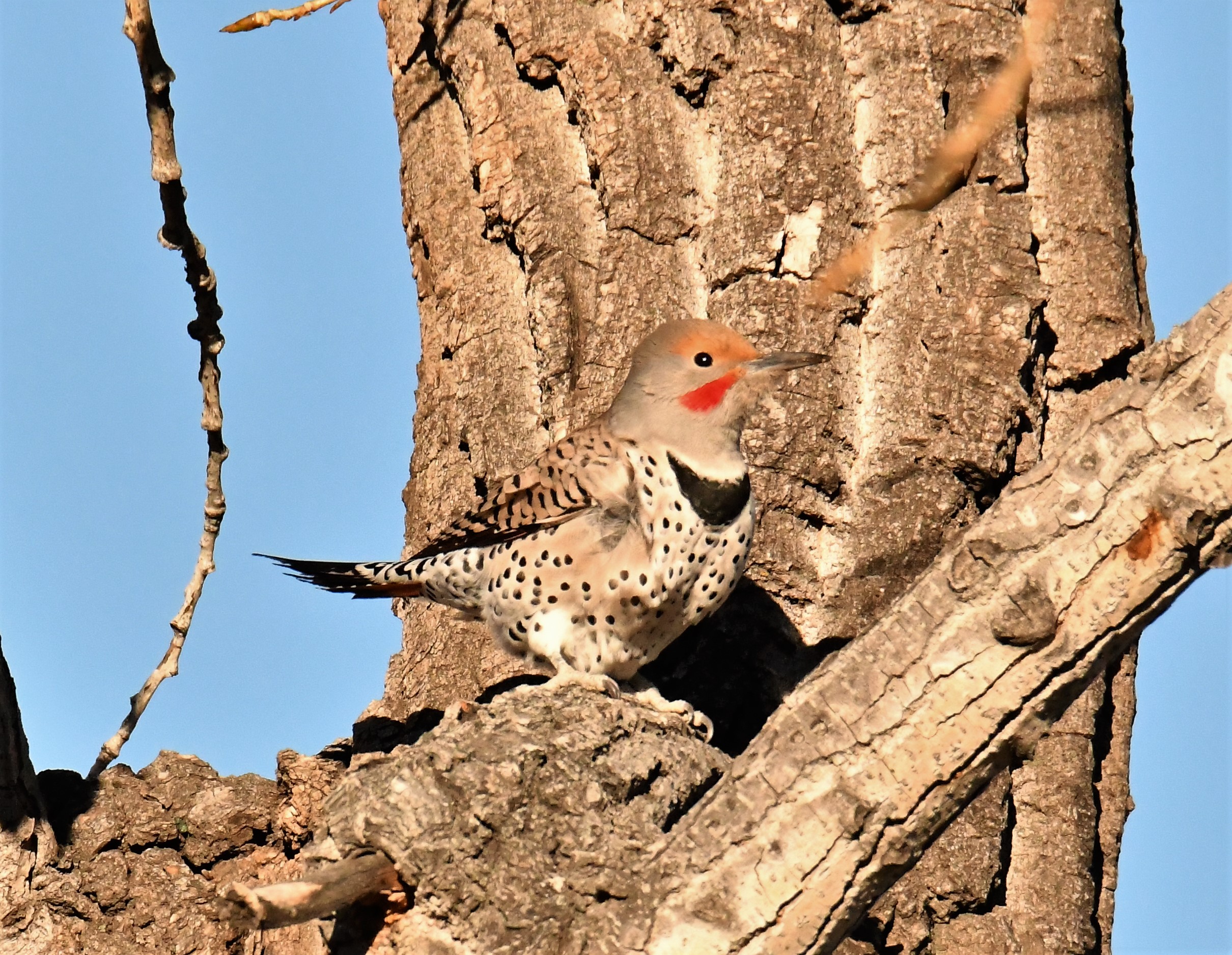
Aside from waterbirds and the shrike, the normal cast of characters was present during our walk: Northern flickers, a Killdeer, American Robins, Red-tailed hawks, Ring-billed Gulls, and a single female American kestrel were all spotted.

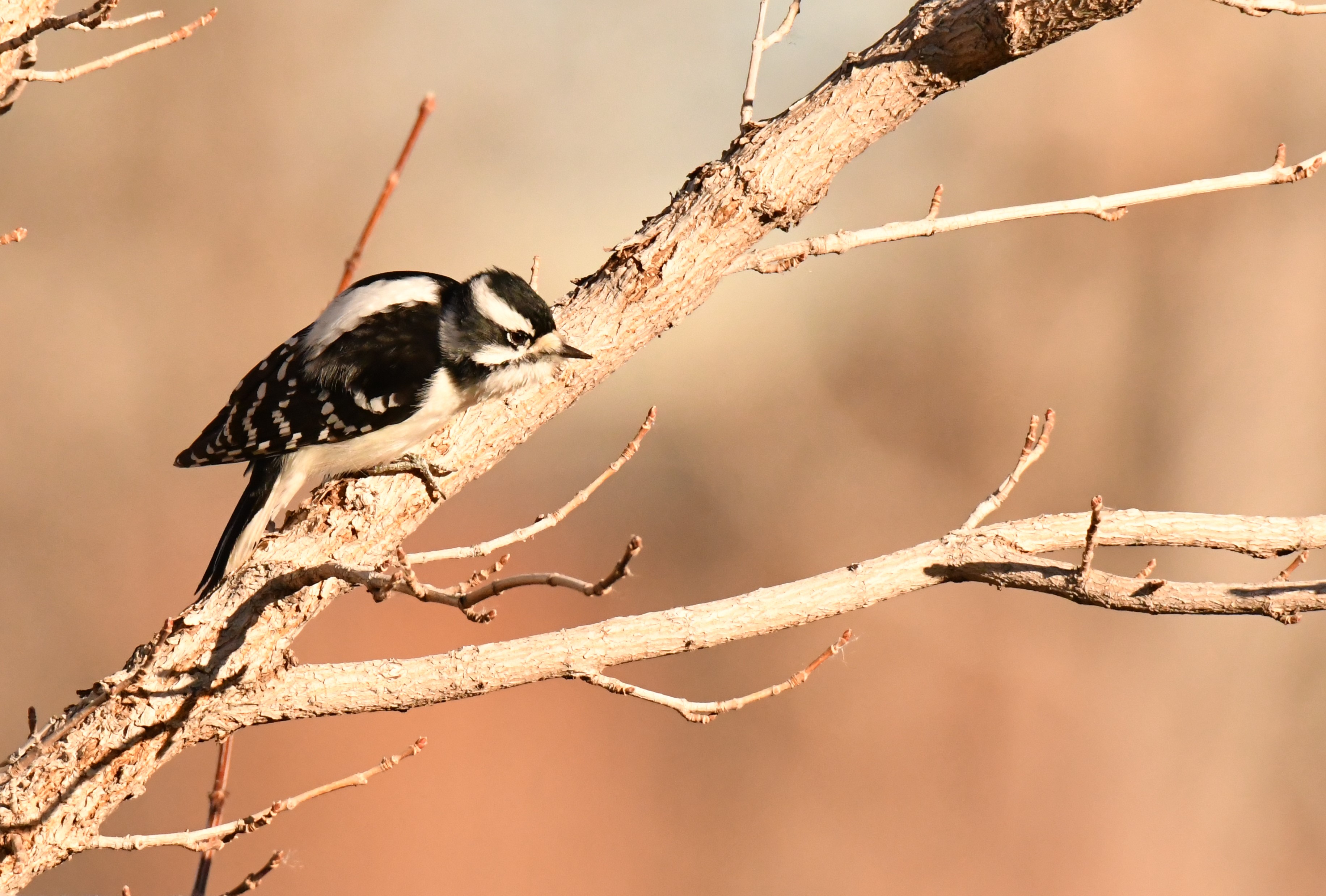
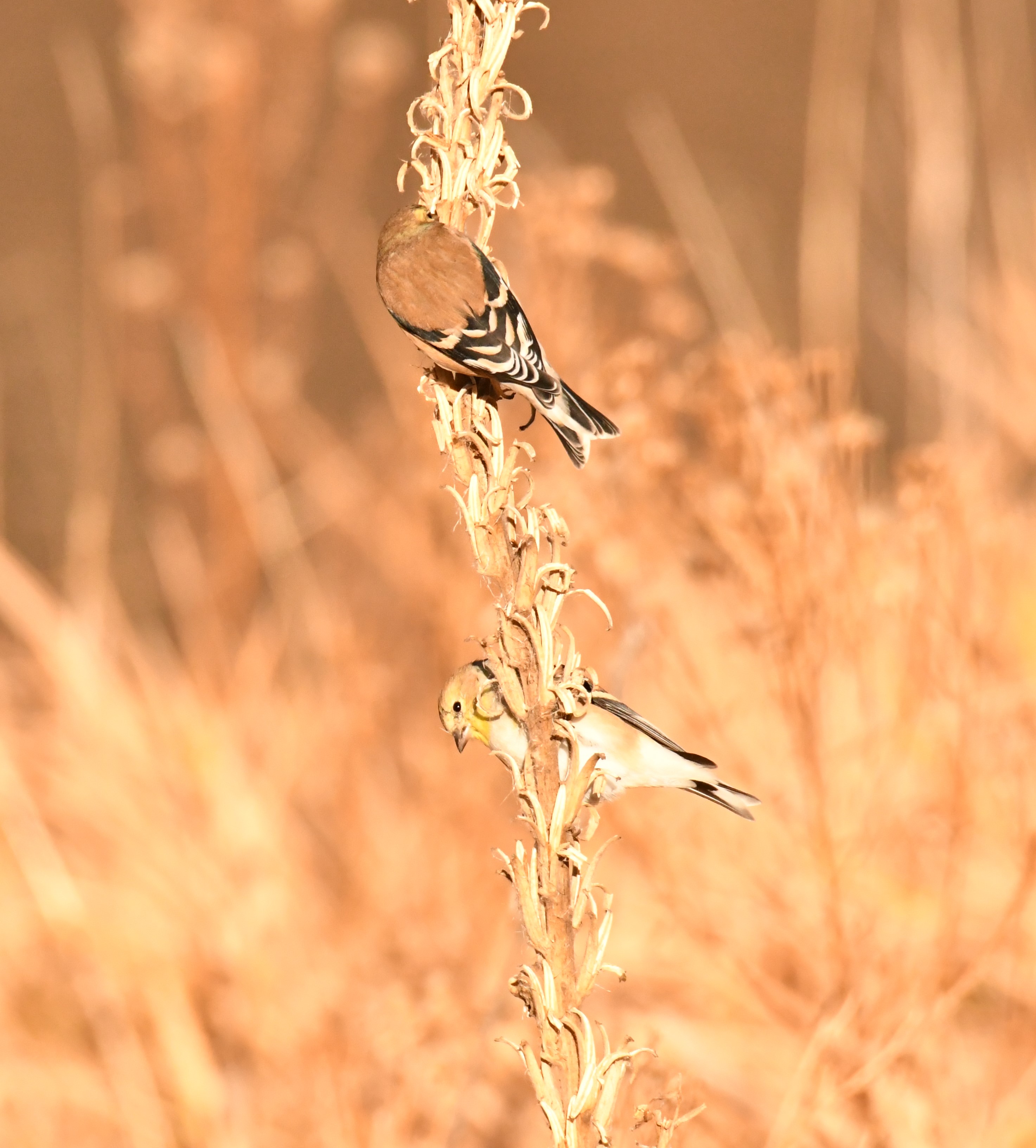
Finally, we had good numbers of feeder birds close to the end of our trip, including Downy Woodpeckers, Red-breasted Nuthatches, House Finches, American goldfinches, Dark-eyed Juncos, and plenty of Black-capped Chickadees. 

This trip was emblematic of the joys of Colorado winter birding: even in a location with a relatively high level of habitat disturbance and modification by humans, a wonderful suite of birds was present and could be seen fairly easily. As a recent transplant to Colorado from New England, I’m constantly impressed with the ease and facility with which one can observe many wonderful wild species, even in Denver’s back doorstep. All the more reason to get out those binoculars and check out our native avian fauna this winter! Check out even more photos of this morning’s birds in the gallery below.

Your humble scribe and photographer,

David Chernack


Hudson Gardens, November 18

24 species

53 Cackling Goose
200 Canada Goose 
20 Gadwall 
18 American Wigeon 
69 Mallard 
2 Green-winged Teal — Both males 
10 Bufflehead 
5 Hooded Merganser 
2 Red-tailed Hawk 
1 Killdeer 
6 Ring-billed Gull 
1 Belted Kingfisher 
3 Downy Woodpecker 
1 American Kestrel — Female
1 Northern Shrike — Female 
5 Black-billed Magpie 
5 American Crow 
12 Black-capped Chickadee 
2 Red-breasted Nuthatch 
1 American Robin 
5 Dark-eyed Junco (Slate-colored) 
12 House Finch 
10 American Goldfinch 
2 House Sparrow 


Harriman Lake, November 4, with Chuck Aid

Redhead (c) Bill Schmoker

Harriman Lake once again delivered, as we spent a beautiful fall morning tallying 34 species (see list below). Everyone enjoyed great looks at eleven species of ducks, all of whom, except for the Shovelers are really showing their glorious breeding plumage.

Ring-necked Duck (c) Bill Schmoker

We saw three species of ducks from the genus Aythya, Redhead, Ringed-necked Duck, and Lesser Scaup. These ducks are all divers and for the most part are only present in Colorado during the winter. We missed on two other species of Aythyas – Canvasback and Greater Scaup – but they are around and their numbers should increase as we get further into winter. Another fun genus of wintering ducks is the Bucephala (from ancient Greek “ox-head”) which includes Common Goldeneye, Barrow’s Goldeneye, and Bufflehead. We had plenty of Buffleheads on Wednesday, but no Goldeneyes yet.

Lesser Scaup (c) Bill Schmoker

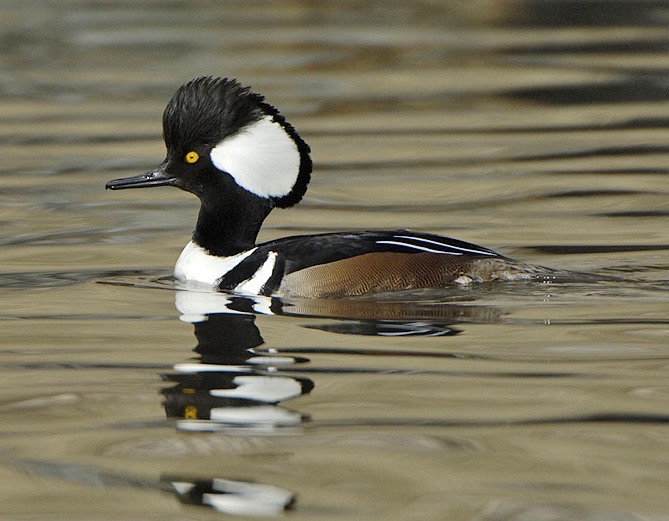
Speaking of breeding plumage, we saw three magnificent male Hooded Mergansers with their hoods all up, and starting to rehearse a bit of head-bobbing courtship with a lone female. We also got great looks at a male and female American Kestrel hanging out together. Finally, we had good numbers of migrant and wintering sparrows – American Tree Sparrow, Dark-eyed Junco, White-crowned Sparrow, and Song Sparrow.

Hooded Merganser (c) Bill Schmoker

Hey! In writing this up, and as I leaf through my bird field guide, I’m thinking about how much I rely on the old taxonomic order of species which generally determines the order in which species appear in field guides (seabirds first, then ducks, raptors, chicken-like birds, herons, etc). AND NOW with so much DNA analysis, for you newbies this taxonomic order keeps getting shifted around almost, it seems, on an annual basis. So, I’m sending you my condolences, and urging you to stick with it and not get frustrated by name changes and changes in the order of the species. It is all a part of realizing that the more we know the more we know we don’t know. We, at the Front Range Birding Company will do our best to continue to help you gain greater proficiency with your birding skills, including an increased awareness of some of these relationships between groups of birds.

American Tree Sparrow (c) Bill Schmoker

Good Birding!

Chuck Aid


Harriman Lake, Nov 4, 2017
34 species

Canada Goose (Branta canadensis)  7
Northern Shoveler (Spatula clypeata)  5
Gadwall (Mareca strepera)  8
American Wigeon (Mareca americana)  28
Mallard (Anas platyrhynchos)  35
Green-winged Teal (Anas crecca)  4
Redhead (Aythya americana)  15
Ring-necked Duck (Aythya collaris)  22
Lesser Scaup (Aythya affinis)  14
Bufflehead (Bucephala albeola)  40
Hooded Merganser (Lophodytes cucullatus)  4
Ruddy Duck (Oxyura jamaicensis)  13
Pied-billed Grebe (Podilymbus podiceps)  16
Red-tailed Hawk (Buteo jamaicensis)  1
American Coot (Fulica americana)  80
Ring-billed Gull (Larus delawarensis)  3
Rock Pigeon (Feral Pigeon) (Columba livia (Feral Pigeon))  4
Eurasian Collared-Dove (Streptopelia decaocto)  23
Downy Woodpecker (Picoides pubescens)  1
Northern Flicker (Colaptes auratus)  4
American Kestrel (Falco sparverius)  2
Blue Jay (Cyanocitta cristata)  3
Black-billed Magpie (Pica hudsonia)  12
American Crow (Corvus brachyrhynchos)  4
Black-capped Chickadee (Poecile atricapillus)  6
American Robin (Turdus migratorius)  2
European Starling (Sturnus vulgaris)  24
American Tree Sparrow (Spizelloides arborea)  20
Dark-eyed Junco (Junco hyemalis)  1
White-crowned Sparrow (Zonotrichia leucophrys)  8
Song Sparrow (Melospiza melodia)  9
Red-winged Blackbird (Agelaius phoeniceus)  26
House Finch (Haemorhous mexicanus)  23
American Goldfinch (Spinus tristis)  3

Chatfield State Park, September 2, with Chuck Aid

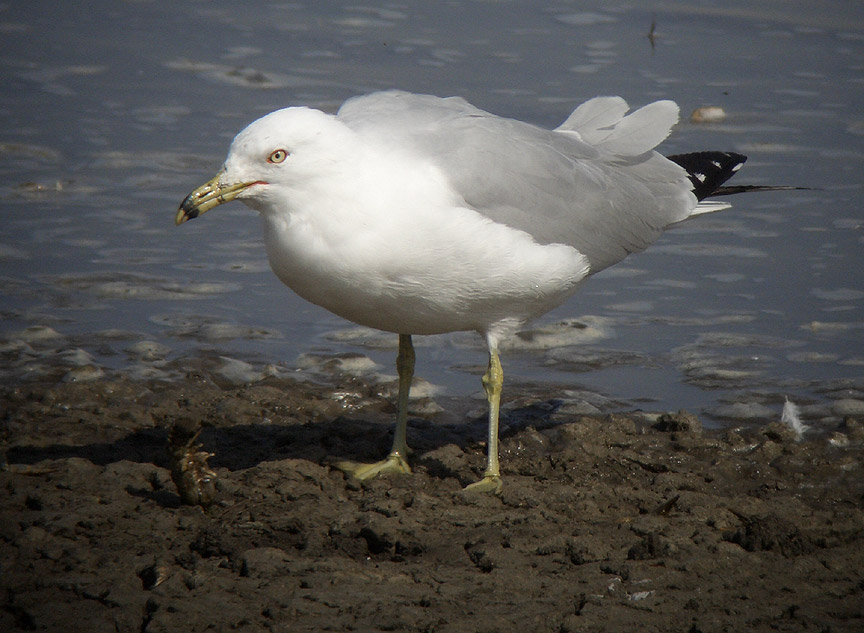
Ring-billed Gull (c) Bill Schmoker

Saturday mornings at Chatfield during the summer are a bit of a mixed bag. The number of ways in which people find to entertain themselves there are astounding, and the atmosphere can be quite circus like. Almost everywhere you look on land and water you see more people, and often birds are being flushed and forced to try and find calmer spots – no easy task.

Nonetheless, this can always be a great place to see a good variety of birds, and occasionally some really great rarities show up. You never know what you’ll see there and you just have to go and check it out. So, that’s what sixteen of us did on Saturday morning, eventually tallying 32 species.

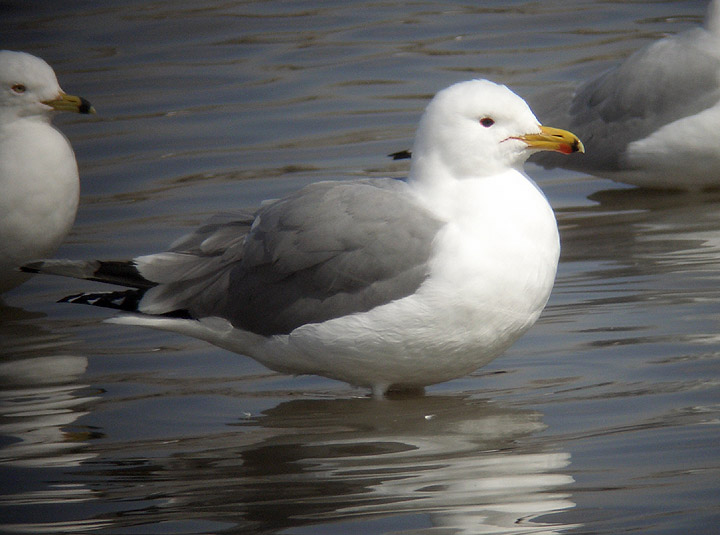
California Gull (c) Bill Schmoker

So, we could have could have subtitled this walk as The Three Most Difficult Bird Groups to Identify: Fall Gulls, Shorebirds, and Sparrows, because, perhaps to the consternation of several of the participants, we ended up spending an inordinate amount of time struggling to identify birds in these three groups.


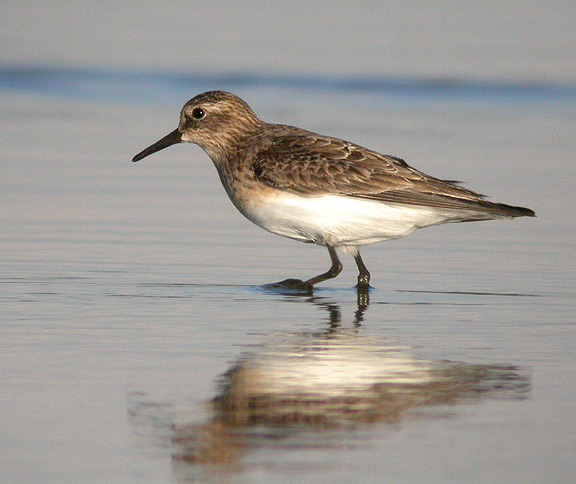
Semi-palmated Sandpiper (c) Bill Schmoker

The gulls were perhaps the easiest, as we only had two species to deal with, but it is a harsh reality to realize that it takes most gulls 3-4 years to obtain adult plumage and there’s a lot of difficult identifications to wrestle with in the intervening years. So, not only did we see adult Ring-billed and California Gulls, but we also saw a 1st winter Ring-billed Gull, and a 3rd winter California Gull, and I’m sure we could have found even more with which to confuse ourselves. If this sort of masochism appeals to you make sure to come on some of our winter walks.

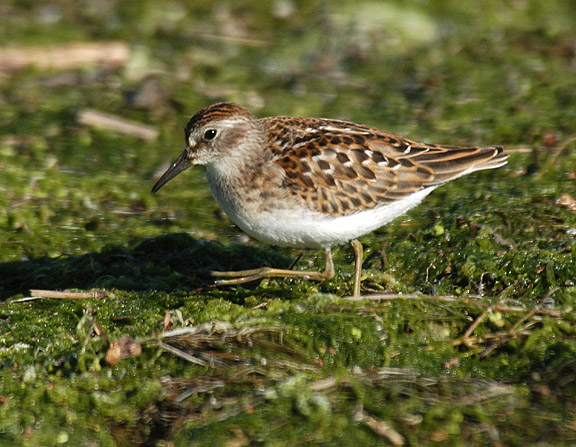
Least Sandpiper (c) Bill Schmoker

As for the sparrows, we did pretty well with the Lark Sparrows, even though they were mostly in their drab fall plumage, but then we ran into members of the Spizella genus. Yikes! Brewer’s, Clay-colored, and Chipping Sparrows are distinctive in breeding plumage, but things get very tough in the fall and really not something to which a nice bird walk leader subjects his/her participants. I’m not sure anyone got really good looks at these guys – not that it always helps – but learning to identify certain species at certain times of the year is not something that we can necessarily do without having spent hours (years?) of time in the field.

Baird’s Sandpiper (c) Bill Schmoker

Finally, we got to the “peeps,” the little sandpipers. And at this point, I want to encourage all of you who are contemplating getting a spotting scope to please do so soon, as it is so helpful to have multiple eyes working on all aspects of identification of this potentially tough group of birds. So, we wrestled with: what color are the legs, how long is the bill, does it have an eye-ring, are the wings longer than the tail, etc…? And we came away with some degree of success.

So, congratulations to those of you who persevered with me on Saturday as we worked on some tough identifications, and I hope that you will all look forward to taking up that gauntlet again in the near future.

Good Birding! Chuck


Chatfield State Park, Sep 2, 2017
32 species

Canada Goose (Branta canadensis)  60
Gadwall (Mareca strepera)  2
Mallard (Anas platyrhynchos)  6
Green-winged Teal (Anas crecca)  4
Common Merganser (Mergus merganser)  8
Western Grebe (Aechmophorus occidentalis)  8
Double-crested Cormorant (Phalacrocorax auritus)  50
American White Pelican (Pelecanus erythrorhynchos)  50
Great Blue Heron (Ardea herodias)  1
Snowy Egret (Egretta thula)  6
Killdeer (Charadrius vociferus)  16
Baird’s Sandpiper (Calidris bairdii)  2
Least Sandpiper (Calidris minutilla)  1
Pectoral Sandpiper (Calidris melanotos)  1
Semipalmated Sandpiper (Calidris pusilla)  1
Spotted Sandpiper (Actitis macularius)  3
Ring-billed Gull (Larus delawarensis)  45
California Gull (Larus californicus)  7
Belted Kingfisher (Megaceryle alcyon)  2
Downy Woodpecker (Picoides pubescens)  1
Northern Flicker (Colaptes auratus)  4
Black-billed Magpie (Pica hudsonia)  9
American Crow (Corvus brachyrhynchos)  1
Black-capped Chickadee (Poecile atricapillus)  5
Yellow Warbler (Setophaga petechia)  2
Chipping Sparrow (Spizella passerina)  4

Clay-colored Sparrow (Spizella pallida) 1
Lark Sparrow (Chondestes grammacus)  7
Western Meadowlark (Sturnella neglecta)  2
Common Grackle (Quiscalus quiscula)  3
House Finch (Haemorhous mexicanus)  2
American Goldfinch (Spinus tristis)  1

Hudson Gardens, August 26, with Chuck Aid

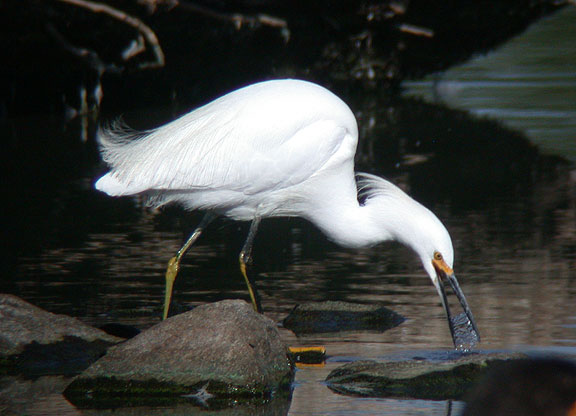
Snowy Egret (c) Bill Schmoker

It was a slow morning at Hudson Gardens this past Saturday. Thirteen of us, while moving from one patch of shade to the next, managed to tally only 24 species. We struck out on a few species that can generally be counted on such as Cooper’s Hawk, Cliff Swallow, and Yellow Warbler, so we had to find our entertainment from those species that we were able to locate.

First of all, we know that Canada Geese are primarily grazers. Create a few hundred golf courses, and watch the local geese population go up another ten thousand birds or so. However, on Saturday the geese were “grazing” in the riffles of the now relatively shallow South Platte River. What I did not know on Saturday, but have since learned, is that geese will at times eat crustaceans and mollusks. So, maybe there was some vegetation growing amidst the rocky riffles, but another possibility is that maybe the geese had switched over to being carnivores. Veloci-geese! Yikes!

Belted Kingfisher (c) Bill Schmoker

I talked about eclipse plumage last year, and I’m going to repeat myself here, so I hope that’s okay. All of our male Mallards on Saturday were in eclipse plumage. This is when male ducks at the end of breeding season molt from their brilliant breeding plumage to a dull, cryptic plumage. This all happens at the same time that the main flight feathers are moulting, and some ducks actually become flightless for a few weeks.  It makes good sense, if you are temporarily flightless, that it might be to your advantage to be more cryptically colored.  The duration of the eclipse plumage varies between species, lasting for some just a couple of weeks, and for others persisting into early winter.  With the next molt the brilliant male colors return.  One interesting thing to contemplate in all this eclipse plumage business is to think about the inherent advantages in remaining cryptically colored for a longer period of time versus regaining one’s brilliance more rapidly. To be camouflaged longer is to be less visible to predators; while to regain breeding plumage more rapidly is to have a “leg up” on impressing the females, but may be deleterious if you really can’t quite fly yet.

Double-crested Cormorant (c) Bill Schmoker

The main highlight of the morning was getting to see three Snowy Egrets apparently cooperatively foraging with five Common Mergansers; and a Belted Kingfisher taking advantage of the chaos to get its share of what was happening, as did a Double-crested Cormorant. Four species of piscivores (fish-eaters) having a pretty successful time of it in the shallows at the edge of the river. I always enjoy seeing the “golden slippers” of the Snowy Egrets, but did you know that at the very peak of breeding season the feet actually become redish-orange, as does the bare skin between the beak and the eye – something to look for next year.

So, we still have young fledglings begging for food from their parents, we have some birds preparing to migrate, and others, apparently, have already hit the road. An interesting time of year!

I hope to see you on another walk soon!

Best, Chuck Aid


Hudson Gardens, Aug 26, 2017

22 species

Canada Goose (Branta canadensis)  19
Mallard (Anas platyrhynchos)  23
Common Merganser (Mergus merganser)  5
Double-crested Cormorant (Phalacrocorax auritus)  3
Great Blue Heron (Ardea herodias)  3
Snowy Egret (Egretta thula)  3
Black-crowned Night-Heron (Nycticorax nycticorax)  2
Red-tailed Hawk (Buteo jamaicensis)  1
Ring-billed Gull (Larus delawarensis)  9
Rock Pigeon (Feral Pigeon) (Columba livia (Feral Pigeon))  1
Mourning Dove (Zenaida macroura)  1
Belted Kingfisher (Megaceryle alcyon)  2
Northern Flicker (Colaptes auratus)  4

Downy Woodpecker 1
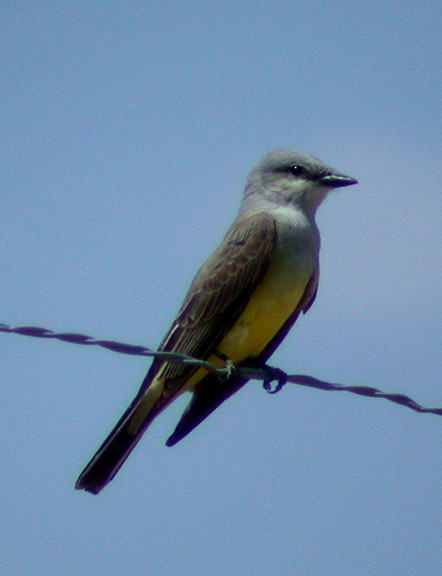
Western Kingbird (Tyrannus verticalis)  1
American Crow (Corvus brachyrhynchos)  2
Barn Swallow (Hirundo rustica)  8
Black-capped Chickadee (Poecile atricapillus)  11
White-breasted Nuthatch (Sitta carolinensis)  2

Bushtit 4
House Wren (Troglodytes aedon)  3
Red-winged Blackbird (Agelaius phoeniceus)  7
House Finch (Haemorhous mexicanus)  10
American Goldfinch (Spinus tristis)  4


Denver Botanic Gardens at Chatfield, August 5, with Chuck Aid

Thirteen of us had a great Saturday morning at the Denver Botanic Gardens at Chatfield, recording 33 species (see list below).

American Goldfinch (c) Bill Schmoker

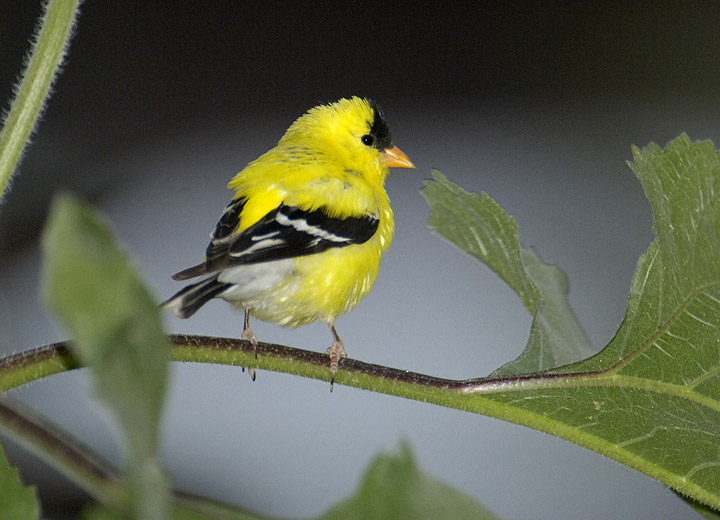
The finches were well represented and we had great looks at both American and Lesser Goldfinches. American Goldfinches are about thirty percent bigger than Lesser Goldfinches, being about half-an-inch longer and more stocky, and they are found throughout the year in Colorado. Lesser Goldfinches used to be found rarely in the winter in Colorado, generally wintering from central Arizona and New Mexico south into Central America, but they have been wintering here increasingly in recent years. Furthermore, thirty years ago Colorado Lessers had a rather brief breeding season (late June to late August), this has expanded, so that we see breeding activity now from mid-May into October. There is much debate as to what may have caused this dramatic change. An interesting aspect of Lessers is that virtually all the birds on the west coast have green backs while all the birds in Texas (the eastern extent of their range) have black backs. Here in eastern Colorado we find both, with the average amount of black increasing as one heads southeast from Colorado. The back patio of the Front Range Birding Company is an excellent place to sit down and study these guys up close.

Lesser Goldfinch (c) Bill Schmoker

While we had many great moments Saturday morning, including a fly-over Golden Eagle, the real highlight was an adult, light morph, Ferruginous Hawk. We tend to think of Ferruginous Hawks as a fairly common winter species here in eastern Colorado. However, they do occur here occasionally in the summer, breeding primarily out on the eastern plains. Generally, the young fledge by mid-July, and as they disperse so, too, do their parents. There have been almost no reports over the last couple of months of any Ferruginous Hawks in the Chatfield area, making our bird one of interest. Here is the description I submitted to eBird, as this is a rare sighting, and they requested documentation:  “Seen primarily from above. Light morph adult in flight – soaring in wide loops with slight dihedral. Rusty back and upper wing coverts. Distinctive tail, white proximally, and pale rufous distally. Long winged, with obvious white primary panels. Seen from about 800-1000 ft with both 8x binocs and 22x scope.”

Overall, it was a rather quiet morning – the calm between the end of breeding season and the advent of migration. Nonetheless, we were very entertained!

See you soon on another Front Range Birding Company bird walk!

Chuck


Denver Botanic Gardens at Chatfield, Aug 5, 2017
33 species (+1 other taxa)

Double-crested Cormorant (Phalacrocorax auritus)  4
Great Blue Heron (Ardea herodias)  2
Turkey Vulture (Cathartes aura)  2
Golden Eagle (Aquila chrysaetos)  1
Swainson’s Hawk (Buteo swainsoni)  1
Red-tailed Hawk (Buteo jamaicensis)  3
Ferruginous Hawk (Buteo regalis)  1

Rock Pigeon (Feral Pigeon) (Columba livia (Feral Pigeon))  4
Mourning Dove (Zenaida macroura)  9
Broad-tailed Hummingbird (Selasphorus platycercus)  8
Downy Woodpecker (Picoides pubescens)  1
Northern Flicker (Colaptes auratus)  8
American Kestrel (Falco sparverius)  1
Say’s Phoebe (Sayornis saya)  2
Western Kingbird (Tyrannus verticalis)  4
Blue Jay (Cyanocitta cristata)  2
Black-billed Magpie (Pica hudsonia)  9
American Crow (Corvus brachyrhynchos)  12
Violet-green Swallow (Tachycineta thalassina)  2
Barn Swallow (Hirundo rustica)  3
Cliff Swallow (Petrochelidon pyrrhonota)  2
swallow sp. (Hirundinidae sp.)  6
Black-capped Chickadee (Poecile atricapillus)  4
White-breasted Nuthatch (Sitta carolinensis)  2
House Wren (Troglodytes aedon)  4
American Robin (Turdus migratorius)  1
Gray Catbird (Dumetella carolinensis)  3
Yellow Warbler (Setophaga petechia)  1
Song Sparrow (Melospiza melodia)  2
Red-winged Blackbird (Agelaius phoeniceus)  6
House Finch (Haemorhous mexicanus)  14
Lesser Goldfinch (Spinus psaltria)  13
American Goldfinch (Spinus tristis)  9
House Sparrow (Passer domesticus)  2


Silver Dollar Lake Trail, July 29, with Chuck Aid

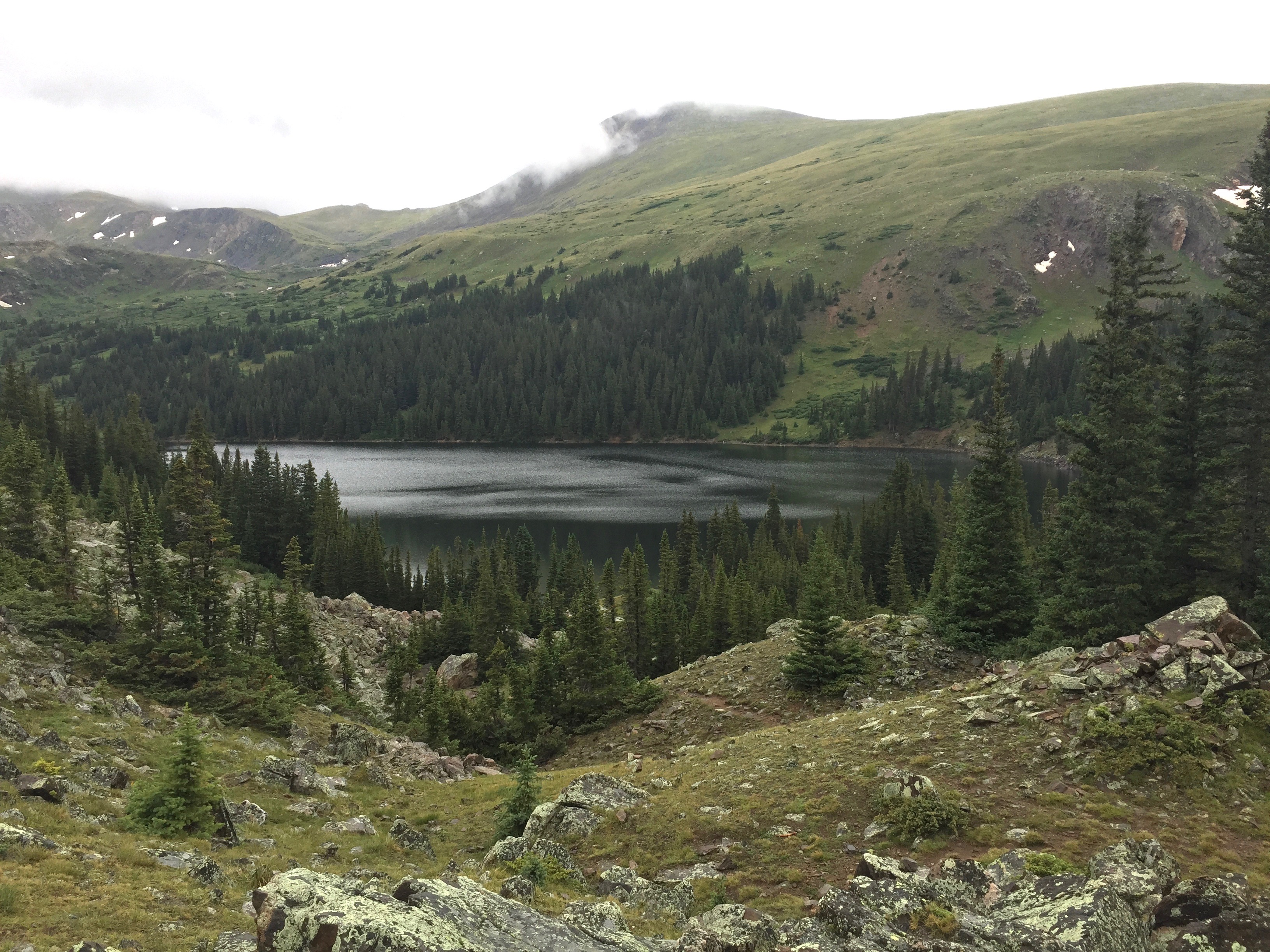
Naylor Lake (c) Chuck Aid

Audubon’s Warbler (c) Rob Raker

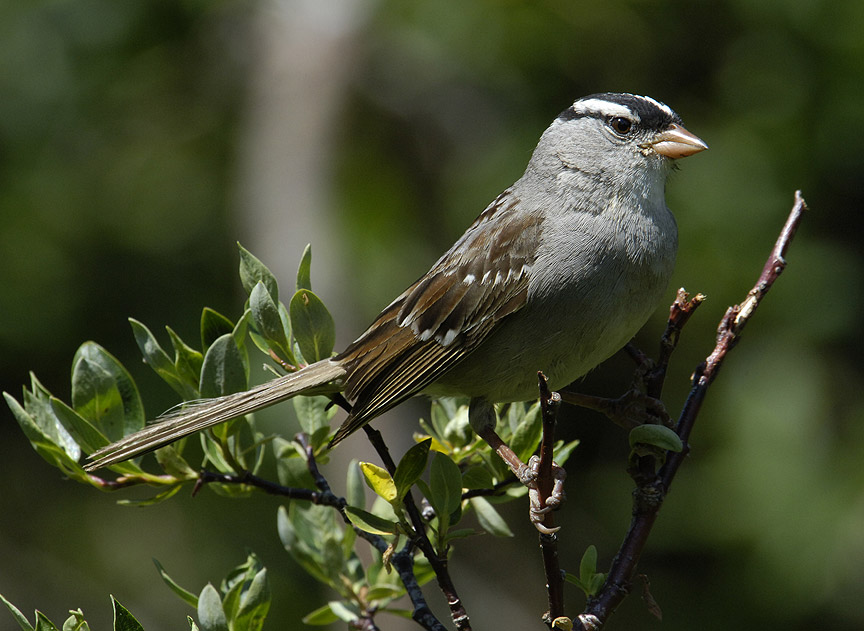
Twelve of us braved periodic rain, trail-side hail from the prior afternoon, slippery roots, and muddy creek crossings as we wended our way up the Silver Dollar Lake trail Saturday morning. Bird activity was fairly minimal, and we came away having tallied only fourteen species (see list below). Those that we got the best looks at were engaged in feeding recently fledged youngsters – Yellow-rumped Warblers and White-crowned Sparrows.

White-crowned Sparrow (c) Bill Schmoker

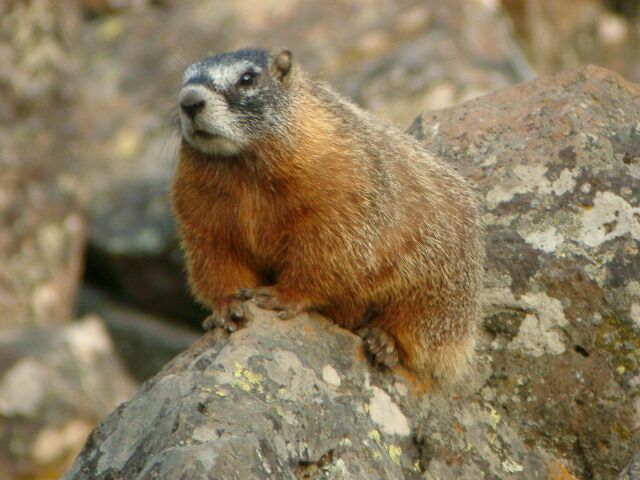
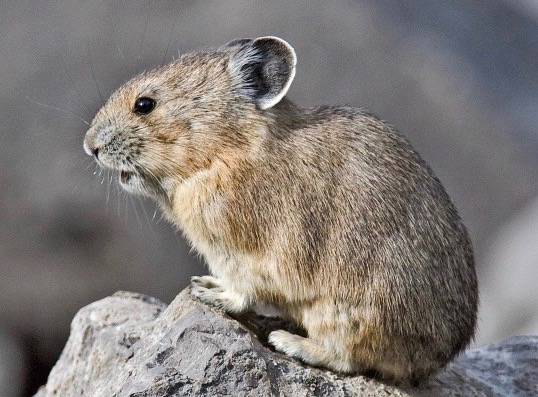
So, we found other ways to entertain ourselves. Luckily we had some rather nonchalant rodents close at hand that provided excellent views – Pine Squirrels, Golden-mantled Ground Squirrels, Pikas, and Yellow-bellied Marmots. Pikas are an exceptionally cute member of the rabbit family. They are only about seven inches long, with no visible tail, little round ears, and have an emphatically loud squeak given from the talus slopes where they reside. They often sit hunched up on a boulder above their nearby piles of fresh hay, on which they feed during the winter. Marmots, on the other hand, also live in talus slopes, but they hibernate through the winter. These guys are surprisingly huge, being about eighteen inches long with their large bushy tail, and they can weigh up to ten pounds. They like to have a large boulder from which to survey their domain and periodically offer up their high-pitched alarm chirp – hence their other name of “whistling” marmot.                    

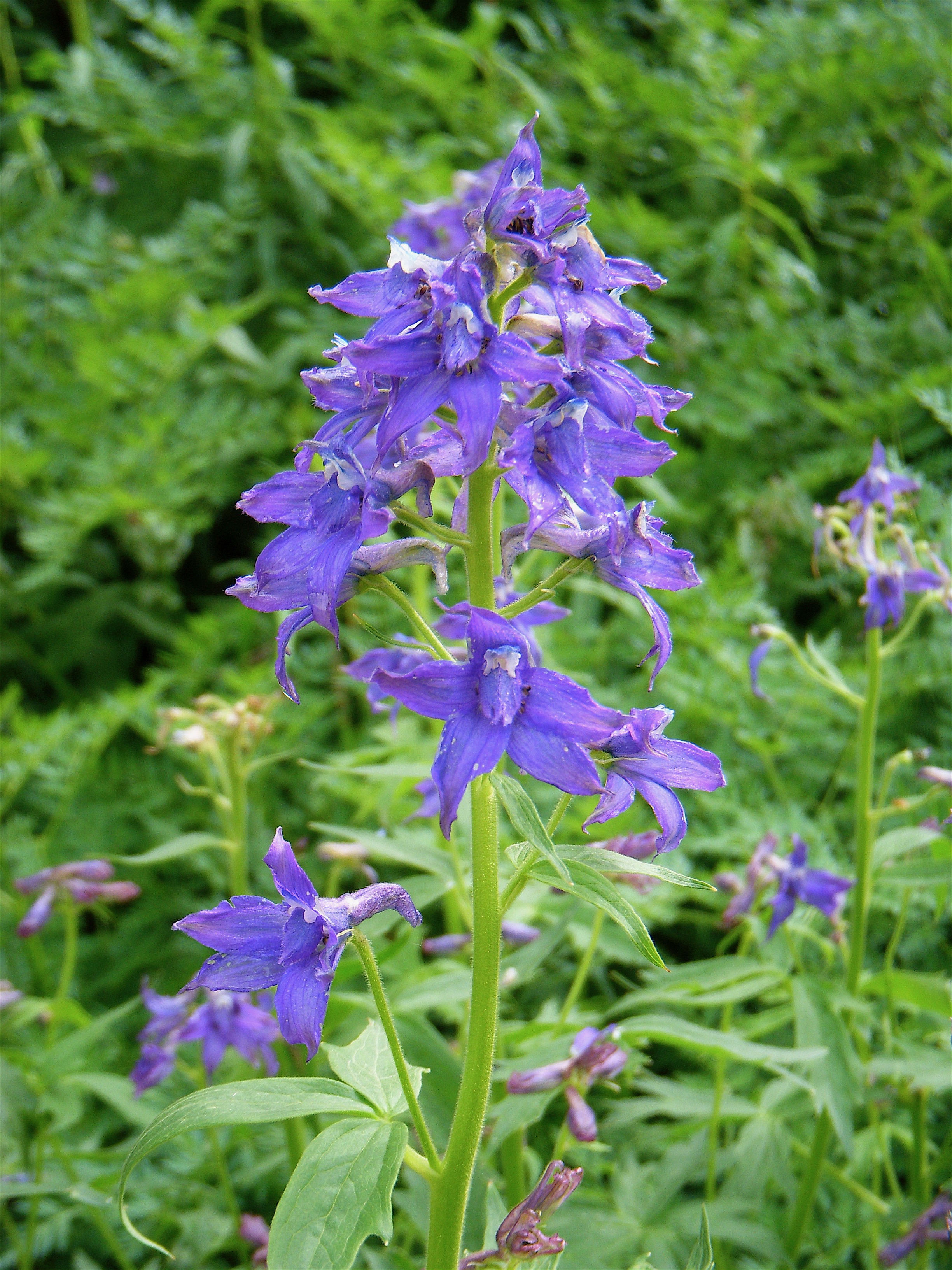
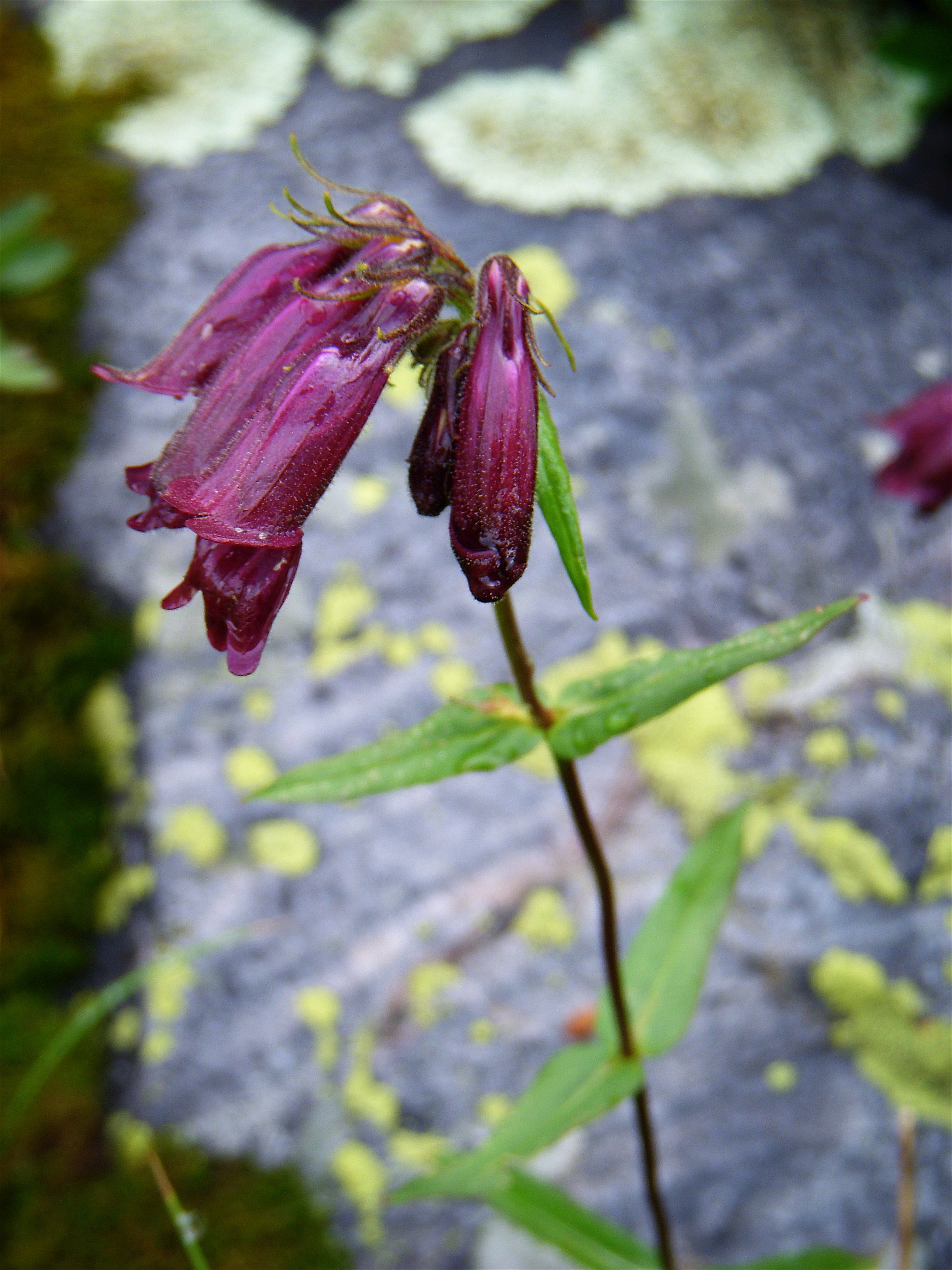
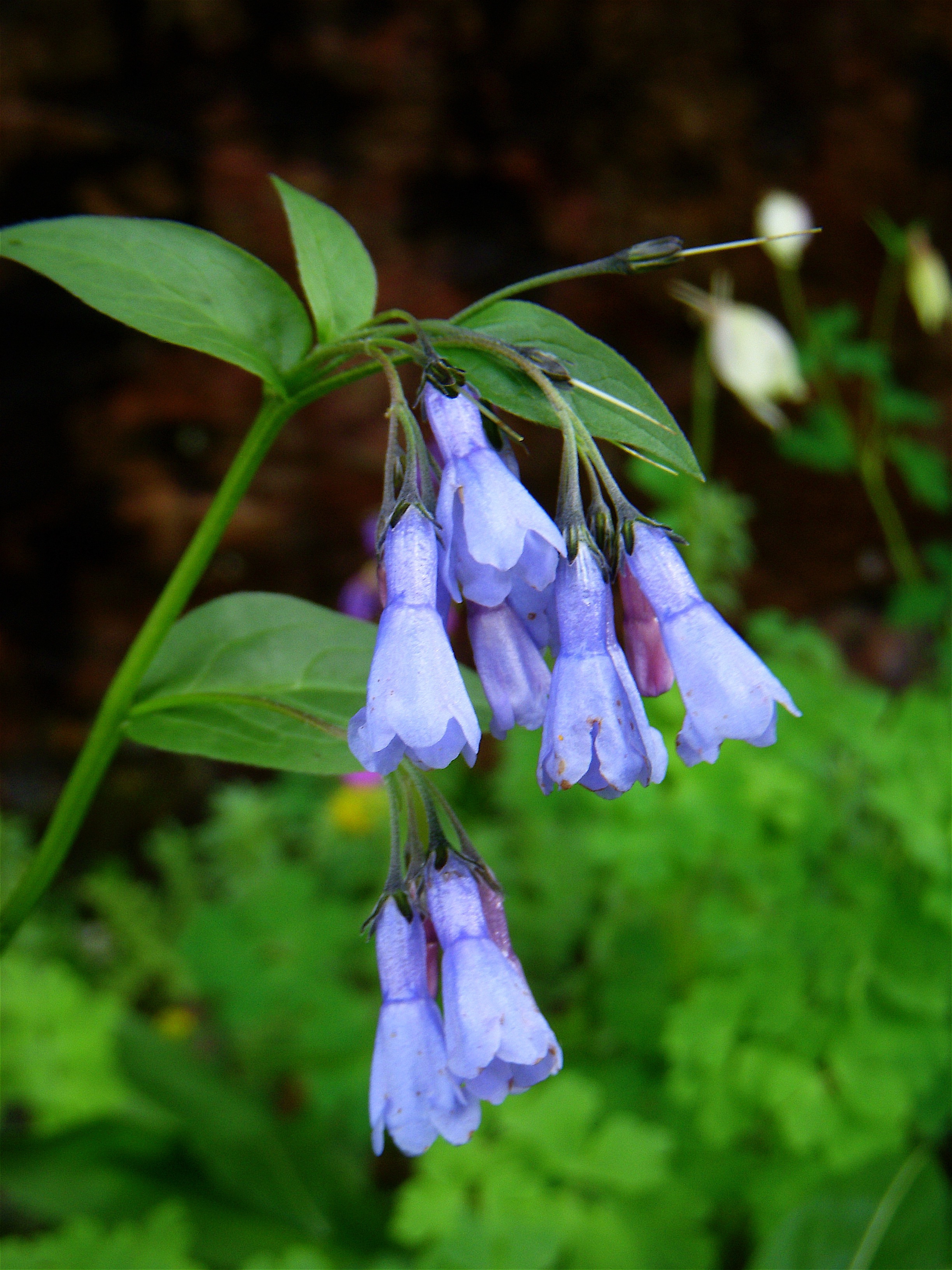
Finally, of course, we saw many wonderful flowers along the streams and in the tundra.

Larkspur (c) Chuck Aid

Whipple’s Penstemon (c) Chuck Aid

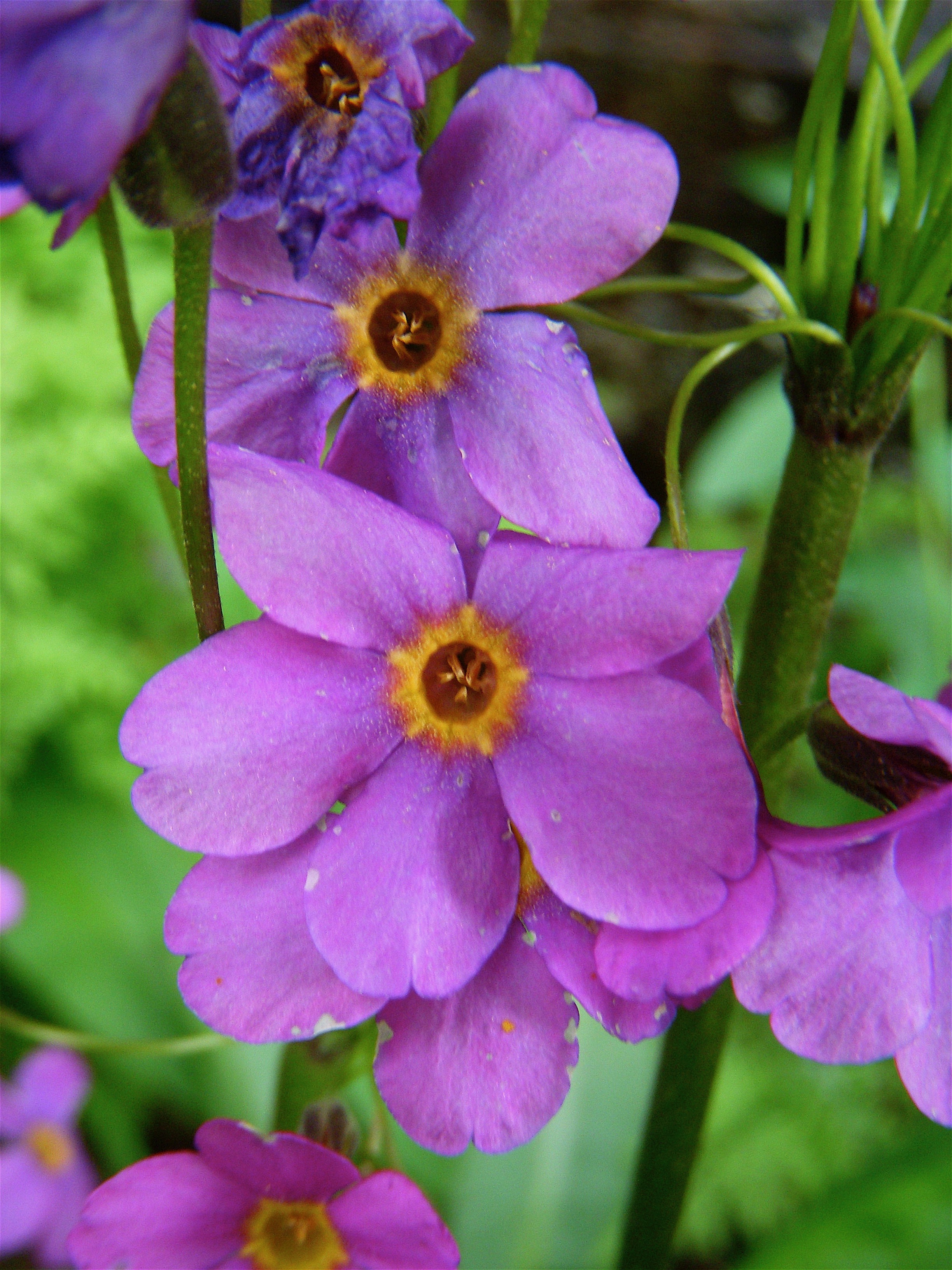
Parry’s Primrose (c) Chuck Aid

Tall Chiming-bells (c) Chuck Aid

Good Birding!

Chuck


Silver Dollar Lake Trail, Jul 29, 2017
14 species

Hairy Woodpecker (Rocky Mts.) (Picoides villosus orius/icastus)  1
Northern Flicker (Red-shafted) (Colaptes auratus [cafer Group])  2
Gray Jay (Perisoreus canadensis)  2
Steller’s Jay (Interior) (Cyanocitta stelleri [diademata Group])  1
Common Raven (Corvus corax)  2
Mountain Chickadee (Poecile gambeli)  4
Red-breasted Nuthatch (Sitta canadensis)  1
Brown Creeper (Certhia americana)  1
American Robin (Turdus migratorius)  1
Yellow-rumped Warbler (Audubon’s) (Setophaga coronata auduboni)  4
Chipping Sparrow (Spizella passerina)  1
Dark-eyed Junco (Gray-headed) (Junco hyemalis caniceps)  5
White-crowned Sparrow (oriantha) (Zonotrichia leucophrys oriantha)  8
Pine Siskin (Spinus pinus)  2


Meyer Ranch, July 1, with Chuck Aid

Not a huge number of species this past Saturday morning, only 27 (see list below). It warmed up quickly which may have been a factor.

Brown Creeper (c) Bill Schmoker

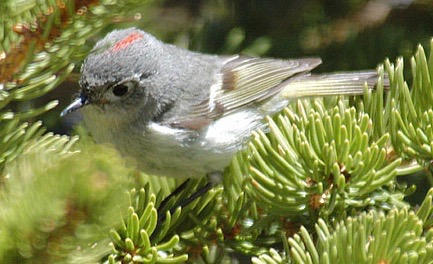
We got to see a Red-wing chasing a Red-tail, attempting to move it on out of the area. In the same part of the color spectrum, a few of us were able to see the crown of the male Ruby-crowned Kinglet (see above photo) as he carried food back to the nest to feed his youngsters. We had a great, though distant, view of a male Black-headed Grosbeak; got to watch a Brown Creeper working over a Douglas-Fir pretty thoroughly, and had a dazzling to-and-fro display by the local Cliff Swallows, that nest on the US 285 bridge by the parking lot, as they carried food back to their mud nests.

Wilson’s Snipe (c) Jeff Jaacks

We had a number of interesting side discussions as we contemplated the flattened petiole of the aspen leaves, relished the multitude of path-side flowers, and learned a bit about differentiating the various conifers from one another, e.g. pine needles grow in bundles (fascicles), while spruce and Douglas-Fir needles emerge singly. Jeff Jaacks shared some fascinating geology tidbits, explaining how the mosaic of underlying igneous and metamorphic bedrock at Meyer Ranch, due in part to differences in pH, directly influences the forest that grows from their soil – Lodgepole Pine forest growing locally on amphibole biotite gneiss (a metamorphic rock), and Ponderosa Pine forest growing on granite (an igneous rock). I told Jeff, that a little bit of knowledge is a dangerous thing, so I hope I’ve gotten this at least partly right.

The highlight of the morning was having four calling Wilson’s Snipe, of which we were able to see one very well and quite close to us. We saw two others that were more hidden, and heard a fourth a bit further off. Very special!

Good birding!

Chuck


Meyer Ranch Open Space, Jul 1, 2017
27 species

Red-tailed Hawk (Buteo jamaicensis)  1
Wilson’s Snipe (Gallinago delicata)  4
Broad-tailed Hummingbird (Selasphorus platycercus)  3
Hairy Woodpecker (Rocky Mts.) (Picoides villosus orius/icastus)  1
Northern Flicker (Red-shafted) (Colaptes auratus [cafer Group])  3
Hammond’s Flycatcher (Empidonax hammondii)  1
Cordilleran Flycatcher (Empidonax occidentalis)  3
Warbling Vireo (Vireo gilvus)  4
Steller’s Jay (Interior) (Cyanocitta stelleri [diademata Group])  3
Cliff Swallow (Petrochelidon pyrrhonota)  35
Mountain Chickadee (Poecile gambeli)  6
Pygmy Nuthatch (Sitta pygmaea)  10
Brown Creeper (Certhia americana)  1
House Wren (Troglodytes aedon)  4
Ruby-crowned Kinglet (Regulus calendula)  5
Hermit Thrush (Catharus guttatus)  1
American Robin (Turdus migratorius)  7
Yellow-rumped Warbler (Audubon’s) (Setophaga coronata auduboni)  2
Chipping Sparrow (Spizella passerina)  3
Dark-eyed Junco (Gray-headed) (Junco hyemalis caniceps)  11
Savannah Sparrow (Passerculus sandwichensis)  2
Song Sparrow (Melospiza melodia)  3
Western Tanager (Piranga ludoviciana)  2
Black-headed Grosbeak (Pheucticus melanocephalus)  1
Red-winged Blackbird (Agelaius phoeniceus)  5
Brown-headed Cowbird (Molothrus ater)  1
Pine Siskin (Spinus pinus)  1